Reviewed June 2026
Dumbbell Shoulder Press
Save
Primary
Shoulders
Secondary
Triceps, Upper chest
Equipment
Dumbbell
Difficulty
Beginner
Type
Push
Want this exercise programmed into a full plan?
MySetPlan shows you when to use Dumbbell Shoulder Press, how many sets and reps to do, what to pair it with, and how to progress next week.
2-minute quiz · No credit card required
Written byMySetPlan Training Team
NASM-CPT, CSCS certified trainers. Every guide is built from peer-reviewed research and real coaching experience.
Dumbbell shoulder presses allow each arm to move independently, requiring more stabilization than barbells. You can sit or stand while pressing dumbbells from shoulder height to overhead. The freedom of movement is easier on your shoulder joints.
Coaching Note
Keep your elbows at about 45 degrees from your torso—not flared out to 90. Press up and slightly together so the dumbbells nearly touch overhead. Lower under control until dumbbells reach shoulder height.
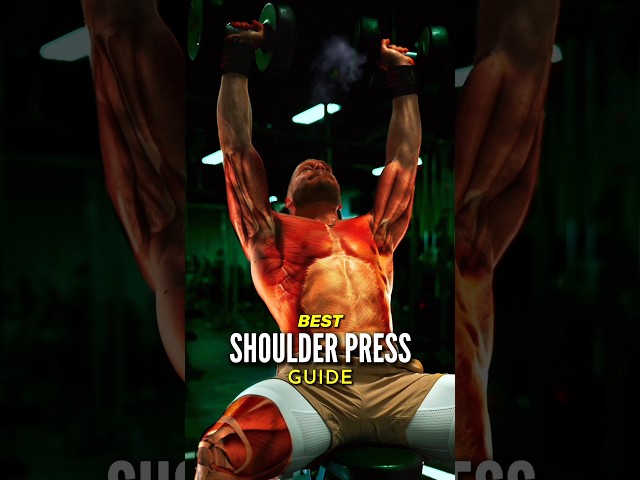
Muscles worked: Dumbbell Shoulder Press
Why This Exercise Works
The dumbbell shoulder press is a compound movement that activates your deltoids (shoulder muscles) as the primary movers, with significant assistance from your triceps and upper chest. The primary deltoid activation occurs in the anterior (front) and medial (middle) deltoid heads. When you press dumbbells overhead, you're working against gravity through a large range of motion, which maximally recruits muscle fibers throughout the movement.
Unlike barbell pressing, dumbbell pressing allows greater freedom of movement. Each arm moves independently, which activates more stabilizer muscles in your rotator cuff and core. This independent movement also helps correct muscular imbalances between sides. Dumbbell presses activate the anterior deltoid significantly more than machine presses because you must stabilize the weight throughout the movement, as EMG research confirms.
The hand angle matters too. A neutral grip (palms facing each other) reduces stress on your shoulder joint compared to a pronated grip (palms facing forward). This is why many strength coaches recommend dumbbell presses for shoulder health. The path of the weight is slightly curved rather than strictly vertical, which follows your body's natural pressing mechanics.
Your triceps assist heavily during dumbbell pressing, especially at the top of the movement when you lock out the weight. Your upper chest (clavicular head of pectoralis major) also assists, particularly when pressing at a slight angle forward rather than straight overhead. The core muscles activate significantly to prevent excessive arching of the lower back, making this a surprisingly effective core stability exercise.
Pressing heavier dumbbells builds raw pressing strength and shoulder stability. Higher reps build muscular endurance and shoulder resilience. The dumbbell shoulder press is considered one of the best upper body pressing movements because it builds strength, muscle, and shoulder health simultaneously.
Dumbbell presses are recommended in the 10-20 rep range rather than going extremely heavy, as Dr. Mike Israetel's hypertrophy research suggests. Because dumbbell pressing is inherently less stable than barbell pressing, it is not the best exercise for generating maximum force. Instead, the advantage of dumbbells is the enhanced range of motion — use it. Go deeper at the bottom than a barbell allows, and bring the dumbbells together at the top for a fuller contraction.
In MySetPlan programs, dumbbell shoulder press is the most commonly assigned overhead pressing movement — appearing more frequently than barbell overhead press. Users who select home gym equipment are almost exclusively assigned dumbbell pressing since it requires less setup. The seated variation is programmed more often than standing, matching the recommendation that seated pressing isolates the shoulders more effectively for hypertrophy work.
Browse all shoulders exercises
Also targets: Triceps, upper chest
See where Dumbbell Shoulder Press fits in your weekly plan
We slot it into the right day with sets, reps, and progression you can follow.
Dumbbell Shoulder Press form guide
- 1
Sit or stand with dumbbells at shoulder height.
- 2
Palms can face forward or toward each other.
- 3
Press the dumbbells overhead.
- 4
Bring them together at the top.
- 5
Lower with control to shoulder height.
- 6
Keep your core engaged.
What are the best tips for the Dumbbell Shoulder Press?
Sitting removes lower body involvement.
Standing requires more core stability.
Press straight up, not forward.
Control the descent.
When to Use the Dumbbell Shoulder Press
Use dumbbell presses as your primary shoulder exercise or after barbell work. They expose and fix strength imbalances between sides. Seated removes core demand; standing adds it. Choose based on your goals.
What are common Dumbbell Shoulder Press mistakes to avoid?
Pressing forward instead of up.
Excessive back arch.
Dumbbells drifting apart.
Is the Dumbbell Shoulder Press right for you?
Lifters with side-to-side strength imbalances that barbell pressing masks. Anyone who wants a deeper range of motion than barbell allows. Home gym trainees without access to a barbell setup.
How many sets and reps of Dumbbell Shoulder Press should you do?
Recommendation: 3-4 sets of 8-12 reps. Rest 90s-2min.
Muscle Growth
8-12 reps
Rest 90s-2min
Strength
5-8 reps
Rest 2-3min
Endurance
12-15 reps
Rest 60s
Where to Use in Your Workout
Use as your primary pressing movement on shoulder day. Seated removes lower body, standing adds core challenge. Follow with isolation work like lateral raises and face pulls for complete shoulder development.
Sample Workout Blocks
Week 1: 4x10 @ RPE 7 | Week 2: 4x8 @ RPE 8 | Week 3: 4x6 @ RPE 8 | Week 4 (deload): 3x10 @ RPE 6
Want a plan that programs the Dumbbell Shoulder Press with the right sets, reps, and progression built in?
Get Your Custom PlanWhere Dumbbell Shoulder Press fits in your workout
MySetPlan places Dumbbell Shoulder Press inside a complete workout — with the right sets, reps, rest periods, and a progression you can follow week to week.
Sample workout
- Overhead Press4 × 8
- Lateral Raise3 × 12
- Dumbbell Shoulder Press3 × 12
- Face Pull3 × 15
Use this exercise in Gym Mode
MySetPlan guides you set by set, times your rest, lets you swap if equipment is busy, and tells you what to do next.
Try Gym Mode FreeWhat are good alternatives to the Dumbbell Shoulder Press?
Overhead Press (Barbell)
ShouldersBarbellIntermediate
Arnold Press
ShouldersDumbbellIntermediate
Machine Shoulder Press
ShouldersMachineBeginner
Other Variations
- Seated DB Press
- Standing DB Press
- Arnold Press
Variation Details
Single-Arm Dumbbell Shoulder Press
Press one dumbbell at a time while standing. This challenges your core even more because you must resist rotation. It's harder than two-arm pressing, so expect to use lighter weight.
Seated Dumbbell Shoulder Press
Perform the same movement while sitting on a bench. Sitting removes leg involvement and forces your shoulders and stabilizers to work harder. Choose a bench with back support or without based on your goals.
Neutral Grip Dumbbell Press
Press dumbbells with palms facing each other (neutral grip) instead of facing forward. This grip is gentler on your shoulders and emphasizes your triceps more. It's excellent for shoulder health.
Machine Shoulder Press
Use a guided machine instead of free dumbbells. The machine stabilizes the weight for you, so it's easier on your joints and allows you to focus purely on pushing strength.
Dumbbell Shoulder Press vs Other Exercises
Dumbbell presses demand more stabilization and activation from your core and rotator cuff. Machine presses are safer and allow heavier weight because the machine guides the movement. Use dumbbells if you want maximum muscle activation; use the machine if you have shoulder issues or want to lift heavier.
The barbell overhead press usually allows slightly more weight because both hands are connected. Dumbbell pressing is gentler on your shoulders because each arm moves freely and can find its optimal path. Both are excellent pressing movements.
This Exercise Is in Your Plan
MySetPlan picks the right exercises for your goals — like the Dumbbell Shoulder Press — and builds them into a monthly program. Every set, every rep, planned out.
Take the Free Quiz2-minute quiz · No charge for 7 days
Related Content
Safety Notes
- Control the weights.
- Don't arch your back excessively.