General exercise guide
Lateral Raise
Save
Primary
Shoulders
Secondary
Traps
Equipment
Dumbbell
Difficulty
Beginner
Type
Pull
See how Lateral Raise could fit a workout
The example below shows one possible placement. Your purchased plan is built from your assessment, and Ely checks every exercise before approving it.
One-time purchase · Checked by Ely · Delivered in 1–3 business days
This page is not medical advice or a rehabilitation protocol. Ely's personal review applies to purchased workout plans and does not replace an in-person assessment by a licensed healthcare professional.
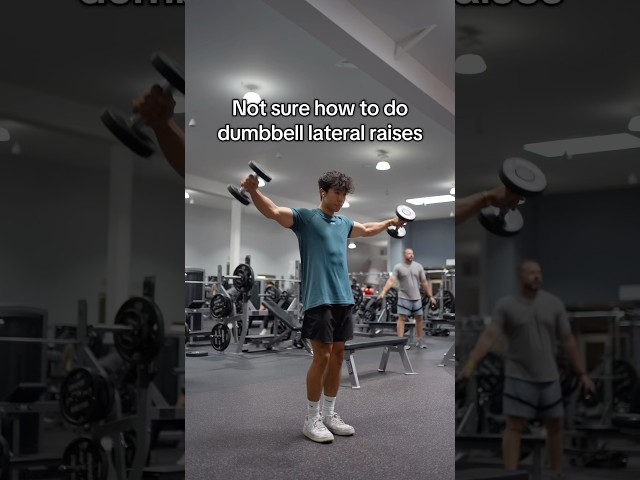
Lateral raises isolate your side delts through shoulder abduction—raising your arms out to the sides. This is the primary exercise for building shoulder width. Most pressing movements neglect the lateral head, making direct isolation essential for capped shoulders.
When to use it
Use for side delt isolation for optimal results.
Who it's for
All fitness levels looking to build strength and muscle definition.
Coaching Note
Lead with your elbows, not your hands. Keep a slight bend in your elbows and raise until arms are parallel to the floor. Do not go higher—trap takes over. Use lighter weight than your ego wants.
Muscles worked: Lateral Raise
Browse all shoulders exercises
Also targets: traps
Want Ely to consider Lateral Raise for your plan?
Share your training details. Ely reviews the full week before anything is delivered.
Lateral Raise form guide
- 1
Stand holding dumbbells at your sides.
- 2
Keep a slight bend in your elbows.
- 3
Raise the dumbbells out to the sides.
- 4
Lift until arms are parallel to the floor.
- 5
Lower with control to your sides.
- 6
Keep your torso stable.
What are the best tips for the Lateral Raise?
Lead with your elbows, not your hands.
Don't swing or use momentum.
Keep a slight forward lean.
Control the weight throughout.
When to Use the Lateral Raise
Use lateral raises after pressing movements when front delts are pre-fatigued. They respond well to high frequency—train them 3-4 times per week with moderate volume. Include them on push days, shoulder days, or as standalone accessory work.
What are common Lateral Raise mistakes to avoid?
Using too much weight and swinging.
Bouncing or using momentum during the Lateral Raise makes the movement harder to control and can shift work away from your Side shoulders (lateral deltoid). Use a load you can move smoothly through the intended range.
Raising too high (above shoulder level).
Changing your shoulder position during the Lateral Raise can redirect the movement away from your Side shoulders (lateral deltoid). Use the shoulder-blade position described in the setup and keep the motion controlled.
Leading with hands instead of elbows.
Letting your elbows drift away from the intended path during the Lateral Raise can change which muscles carry the load. Use the elbow position described in the setup cues and keep it consistent through each rep.
Shrugging shoulders up.
Changing your shoulder position during the Lateral Raise can redirect the movement away from your Side shoulders (lateral deltoid). Use the shoulder-blade position described in the setup and keep the motion controlled.
Is the Lateral Raise right for you?
All fitness levels looking to build strength and muscle definition.
Programming examples for Lateral Raise
The sets, reps, and rest times below are examples. Adjust them for your current ability, the exercise, and your total training. These ranges are not exclusive to one goal.
Example: 3-4 sets of 12-15 reps. Rest 60s.
Muscle Growth
12-15 reps
Example rest: 90s-2min; extend as needed
Strength
8-10 reps
Example rest: 2-3min; extend as needed
Endurance
15-25 reps
Example rest: 60s; extend as needed
Where to Use in Your Workout
Lateral raises fit best after pressing movements when the anterior delts are pre-fatigued, allowing you to focus on the lateral head. They respond well to high reps (12-20) and can be trained frequently (3-4x/week). Include them on shoulder days, push days, or as a standalone shoulder accessory on other training days. For shoulder width prioritization, perform 15-25 total sets of lateral raises per week distributed across 3-4 sessions. Drop sets and mechanical drop sets (starting with cables, moving to dumbbells) are extremely effective for this muscle since it responds well to metabolic stress. Giant sets combining different lateral raise angles can thoroughly exhaust the lateral delts in minimal time.
Sample Workout Blocks
SHOULDER FOCUS DAY
1. Overhead Press — 4 sets × 6-8 reps (2 min rest)
2. Lateral Raise — 4 sets × 12-15 reps (60 sec rest)
3. Face Pull — 3 sets × 15-20 reps (45 sec rest)
4. Reverse Pec Deck — 3 sets × 12-15 reps (45 sec rest)

PUSH DAY SHOULDER FINISHER
1. Bench Press — 4 sets × 6-8 reps
2. Incline Dumbbell Press — 3 sets × 10-12 reps
3. Lateral Raise — 3 sets × 15-20 reps (45 sec rest)
4. Tricep Pushdown — 3 sets × 12-15 reps
Want help choosing exercises, sets, and reps for your schedule? Ely reviews purchased plans before delivery.
Get Your Custom PlanWhere Lateral Raise fits in your workout
This is one example of how Lateral Raise could sit inside a complete workout. Your plan may use different movements after Ely checks your assessment.
Sample workout
- Overhead Press4 × 8
- Lateral Raise3 × 12
- Lateral Raise3 × 12
- Face Pull3 × 15
Use this exercise in Gym Mode
MySetPlan guides you set by set, times your rest, records your work, and tells you what to do next from the plan Ely approved.
Start My $19 WeekWhat are good alternatives to the Lateral Raise?
Other Variations
Variation Details
Cable Lateral Raise
Perform lateral raises using a low cable pulley. This provides more constant tension throughout the movement compared to dumbbells, where resistance is lowest at the bottom. The cable angle also changes the strength curve slightly, often providing a better mind-muscle connection.
Seated Lateral Raise
Perform lateral raises while seated on a bench. This eliminates lower body momentum and leg drive, forcing stricter form. The seated position also reduces the ability to lean or sway, making this variation excellent for isolating the lateral delts with lighter weights.
Leaning Lateral Raise
Hold a sturdy object with one hand and lean away from it while performing single-arm lateral raises. This changes the resistance curve to provide more tension at the bottom of the movement where dumbbells normally provide the least resistance. Excellent for maximizing lateral delt stretch.
Machine Lateral Raise
Use a dedicated lateral raise machine with pads that support your upper arms. This eliminates grip demands and provides a fixed movement path. The machine variation is excellent for training to failure safely and for high-rep drop sets.
Band Lateral Raise
Perform lateral raises using a resistance band under your feet. Bands provide accommodating resistance — tension increases as you raise your arms. Useful for warm-ups, home training, or as a finisher after dumbbell work. Light bands work well for high-rep sets.
Lateral Raise vs Other Exercises
Cable lateral raises provide more constant tension throughout the range of motion compared to the variable tension of dumbbells. Many lifters find cables easier on the shoulders due to the smooth resistance. Dumbbells are more accessible and portable. For complete development, rotate between both — dumbbells for the peak contraction emphasis, cables for constant tension.
Machine lateral raises eliminate grip demands and provide a fixed movement path, making it easier to focus purely on the lateral delt. Dumbbell raises require more stabilization and may develop better overall shoulder function. Use machines for high-rep work, drop sets, and training to failure; use dumbbells for moderate rep ranges and when machines are unavailable.
Want a plan you do not have to piece together?
Share your goal, schedule, equipment, and experience. Ely checks the complete exercise selection before he approves your week.
Start My $19 Starter Week$19 once · No automatic renewal · Delivered in 1–3 business days
Related Content
Safety Notes
- Don't use too much weight.
- Avoid swinging.
- General fitness education only. This is not medical advice or a rehabilitation protocol. Stop if you feel pain, and follow a licensed healthcare professional for an injury, medical condition, or return after surgery.