General exercise guide
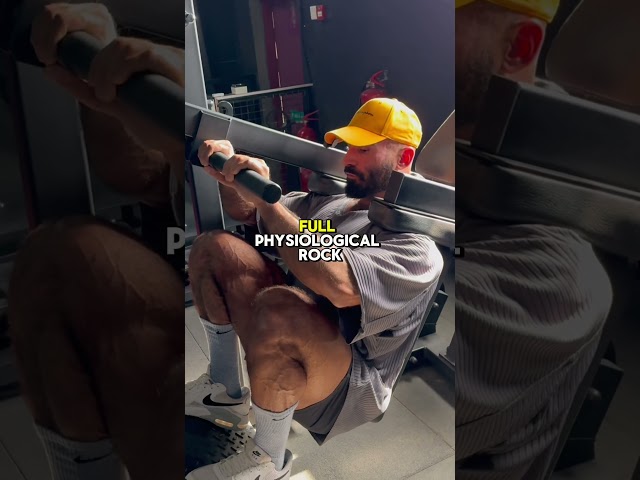
Pendulum Squat
Save
Primary
Glutes
Secondary
Quadriceps, Hamstrings
Equipment
Machine
Difficulty
Intermediate
Type
Squat
See how Pendulum Squat could fit a workout
The example below shows one possible placement. Your purchased plan is built from your assessment, and Ely checks every exercise before approving it.
One-time purchase · Checked by Ely · Delivered in 1–3 business days
This page is not medical advice or a rehabilitation protocol. Ely's personal review applies to purchased workout plans and does not replace an in-person assessment by a licensed healthcare professional.
The pendulum squat machine guides your body through an arc path rather than straight up and down, creating a squat pattern that many lifters find more comfortable than hack squats or Smith machines. The arc motion reduces joint stress at the bottom while still allowing heavy loading for quad and glute development. No spinal compression means you can train legs intensely even with back limitations.
When to use it
Use as a main leg exercise when you want to train quads and glutes intensely without spinal compression, or as a secondary squat movement after barbell work. The machine safety allows training to failure with drop sets.
Who it's for
Adults using the movement for general fitness who can perform it without pain. Clinical concerns require guidance from a licensed healthcare professional.
Coaching Note
Position your shoulders firmly under the pads and keep your feet flat on the platform throughout. The machine handles balance—focus entirely on driving through your feet and achieving full depth. Experiment with foot placement: higher targets glutes, lower emphasizes quads.
Muscles worked: Pendulum Squat
Also targets: Quadriceps, Hamstrings
Want Ely to consider Pendulum Squat for your plan?
Share your training details. Ely reviews the full week before anything is delivered.
Pendulum Squat form guide
- 1
Position yourself in the pendulum squat machine.
- 2
Place your shoulders under the pads.
- 3
Set your feet on the platform.
- 4
Unrack and lower by bending your knees.
- 5
Go as deep as mobility allows.
- 6
Drive through your feet to stand.
What are the best tips for the Pendulum Squat?
The arc mimics a natural squat path.
Focus on full range of motion.
Keep constant tension on muscles.
When to Use the Pendulum Squat
Program pendulum squats as your primary leg exercise when you want heavy squatting without spinal loading, or as a secondary movement after barbell squats for additional volume. The machine safety allows training to failure, making them excellent for drop sets and intensity techniques.
What are common Pendulum Squat mistakes to avoid?
Using too much weight.
Loading more weight than you can control on the Pendulum Squat often creates compensations that shift work away from your Glutes (gluteus maximus). Reduce the load until each rep follows the intended path.
Not going deep enough.
Squatting patterns like the Pendulum Squat coordinate the hips, knees, and feet. Keep those positions consistent and use a range you can control while your Glutes (gluteus maximus) carries the intended load.
Rushing through reps.
Rushing through the Pendulum Squat makes it easier to lose position and harder to keep tension on your Glutes (gluteus maximus). Slow down enough to control both the lifting and lowering portions of each rep.
Is the Pendulum Squat right for you?
Adults using the movement for general fitness who can perform it without pain. Clinical concerns require guidance from a licensed healthcare professional.
Programming examples for Pendulum Squat
The sets, reps, and rest times below are examples. Adjust them for your current ability, the exercise, and your total training. These ranges are not exclusive to one goal.
Example: 3-4 sets of 10-15 reps. Rest 90s.
Muscle Growth
10-15 reps
Example rest: 90s-2min; extend as needed
Strength
5-8 reps
Example rest: 2-3min; extend as needed
Endurance
15-20 reps
Example rest: 60s; extend as needed
Where to Use in Your Workout
As a primary quad exercise or after barbell squats for additional leg volume. Excellent for hypertrophy-focused leg training.
Sample Workout Blocks
Workout: Quad Emphasis Day
1. Barbell Back Squat: 4 sets × 5 reps
2. Pendulum Squat: 4 sets × 10 reps
3. Leg Press: 3 sets × 12 reps
4. Leg Extension: 3 sets × 15 reps
5. Walking Lunge: 3 sets × 10 reps each leg

Rest 90 seconds between pendulum squat sets. This workout builds quad strength and size with compound and isolation work.
Want help choosing exercises, sets, and reps for your schedule? Ely reviews purchased plans before delivery.
Get Your Custom PlanWhere Pendulum Squat fits in your workout
This is one example of how Pendulum Squat could sit inside a complete workout. Your plan may use different movements after Ely checks your assessment.
Sample workout
- Squat or Leg Press4 × 8
- Romanian Deadlift3 × 10
- Pendulum Squat3 × 12
- Calf Raise3 × 15
Use this exercise in Gym Mode
MySetPlan guides you set by set, times your rest, records your work, and tells you what to do next from the plan Ely approved.
Start My $19 WeekWhat are good alternatives to the Pendulum Squat?
Other Variations
- Wide Stance Pendulum Squat
- Narrow Stance Pendulum Squat
Variation Details
Hack Squat
Similar machine squat but with a straight up-and-down path rather than an arc. Strong quad emphasis. Another excellent machine squat option.
Leg Press
Push weight away with your legs while seated or lying back. Different angle than squatting but targets similar muscles. Good for high-rep leg training.
Barbell Back Squat
The classic free-weight squat. Requires more balance and core activation. Builds overall strength and stability beyond machine variations.
Goblet Squat
Hold a dumbbell or kettlebell at your chest while squatting. Good for learning squat mechanics and for higher-rep training.
Pendulum Squat vs Other Exercises
vs Hack Squat
Both are machine squats emphasizing quads. Pendulum squat has an arc motion; hack squat has a straight path. Some find pendulum more comfortable. Both are excellent quad builders. Try each and use your preference.
vs Leg Press
Pendulum squat has a more squat-like standing motion; leg press is a seated pushing motion. Pendulum may activate more muscle due to body position. Both build leg size effectively. Use both for variety.
Want a plan you do not have to piece together?
Share your goal, schedule, equipment, and experience. Ely checks the complete exercise selection before he approves your week.
Start My $19 Starter Week$19 once · No automatic renewal · Delivered in 1–3 business days
Related Content
Safety Notes
- Adjust machine to fit your body.
- Start with lighter weight.
- General fitness education only. This is not medical advice or a rehabilitation protocol. Stop if you feel pain, and follow a licensed healthcare professional for an injury, medical condition, or return after surgery.