General exercise guide
Hack Squat
Save
Primary
Quadriceps
Secondary
Glutes, Hamstrings
Equipment
Machine
Difficulty
Beginner
Type
Squat
See how Hack Squat could fit a workout
The example below shows one possible placement. Your purchased plan is built from your assessment, and Ely checks every exercise before approving it.
One-time purchase · Checked by Ely · Delivered in 1–3 business days
This page is not medical advice or a rehabilitation protocol. Ely's personal review applies to purchased workout plans and does not replace an in-person assessment by a licensed healthcare professional.
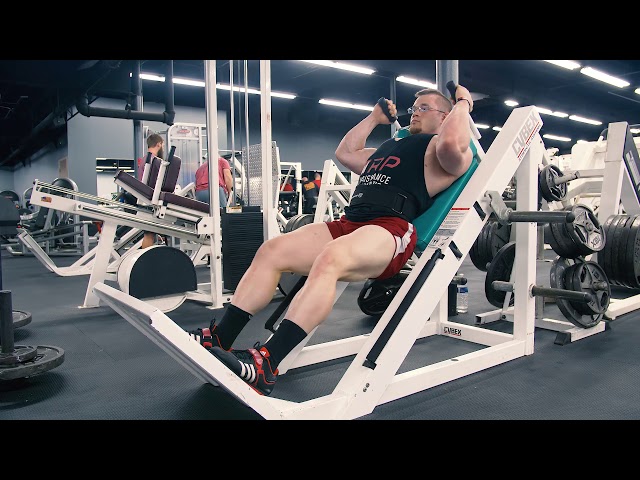
The hack squat machine fixes your back against an angled pad and guides the movement path, letting you load your quads heavily without balancing a barbell or stressing your spine. The 45-degree angle creates constant tension through the entire range of motion—unlike free squats where lockout provides rest. Foot placement determines whether you emphasize quads or glutes, making this machine surprisingly versatile.
When to use it
Use as your primary or secondary quad movement on leg day. Position after free weight squats when your stabilizers are fatigued but quads have more to give. Choose hack squat over leg press when you want more quad stretch and a squatting pattern.
Who it's for
Adults using the movement for general fitness who can perform it without pain. Clinical concerns require guidance from a licensed healthcare professional.
Coaching Note
Keep your lower back welded to the pad at all times. If it lifts at the bottom, you have exceeded your current mobility—reduce depth before reducing weight. Press through your entire foot evenly; pushing through just heels or toes shifts stress to your knees.
Hack Squat — targeted muscles
Browse all quadriceps exercises
Also targets: Glutes, Hamstrings
Want Ely to consider Hack Squat for your plan?
Share your training details. Ely reviews the full week before anything is delivered.
How do you perform the Hack Squat?
- 1
Position yourself in the hack squat machine.
- 2
Place your back and shoulders against the pads.
- 3
Set your feet shoulder-width apart on the platform.
- 4
Unrack the weight by straightening your legs.
- 5
Lower the weight by bending your knees.
- 6
Descend until thighs are parallel or below.
- 7
Push through your feet to return to start.
What are the best tips for the Hack Squat?
Keep your back flat against the pad.
Lower stance emphasizes quads more.
Control the descent.
Don't lock out completely at the top.
When to Use the Hack Squat
Program hack squats after free weight squats when your stabilizers are fatigued but your quads have more to give. Use as a primary leg movement when back squats are contraindicated due to spinal issues. Low foot placement isolates quads; high and wide placement shifts emphasis to glutes and hamstrings.
Common Hack Squat mistakes
Heels coming off the platform.
Your foot position during the Hack Squat determines how force transfers through your body. Keep your feet flat with weight distributed evenly — losing contact with the ground means you're losing power and stability.
Knees caving inward.
Letting your knees drift away from the intended line during the Hack Squat changes how force moves through the exercise. Keep each knee tracking in line with the foot as you move.
Not going deep enough.
Squatting patterns like the Hack Squat coordinate the hips, knees, and feet. Keep those positions consistent and use a range you can control while your Quadriceps carries the intended load.
Using too much weight.
Loading more weight than you can control on the Hack Squat often creates compensations that shift work away from your Quadriceps. Reduce the load until each rep follows the intended path.
Hack Squat — who it's best for
Adults using the movement for general fitness who can perform it without pain. Clinical concerns require guidance from a licensed healthcare professional.
Programming examples for Hack Squat
These ranges illustrate ways to organize training. They are not an individual prescription. Adjust them for the exercise, your experience, and the rest of your program.
Strength6-8 reps
Heavier loads can be useful for developing maximum strength. The range shown is an example, and the load must match your current technique and capacity.
Muscle Growth10-15 reps
Muscle growth can occur across different loads and repetition ranges. This example is not a uniquely effective zone; your overall program and effort also matter.
Endurance15-20 reps
This is an example of a longer set. A repetition target alone does not establish joint safety or whether the exercise is appropriate for you.
Example: 3-4 sets of 10-12 reps. Rest 90s-2min.
Background for resistance exercises: the 2026 ACSM position stand covers healthy adults, and a load-comparison review found similar muscle growth across loads in studies using sets taken to muscular failure. These findings do not validate every exercise-specific range shown here or require training to failure.
Where Hack Squat fits in your workout
This is one example of how Hack Squat could sit inside a complete workout. Your plan may use different movements after Ely checks your assessment.
Sample workout
- Squat or Leg Press4 × 8
- Romanian Deadlift3 × 10
- Hack Squat3 × 12
- Calf Raise3 × 15
Use this exercise in Gym Mode
MySetPlan guides you set by set, times your rest, records your work, and tells you what to do next from the plan Ely approved.
Start My $19 WeekWhat are good alternatives to the Hack Squat?
Leg Press
QuadricepsMachineBeginner
Front Squat
QuadricepsBarbellIntermediate
Smith Machine Squat
QuadricepsSmith MachineBeginner
Other Variations
- Reverse Hack Squat
- Narrow Stance Hack Squat
- Single-Leg Hack Squat
Variation Details
Reverse Hack Squat
Face into the machine with your chest against the pad instead of your back. This shifts emphasis toward the glutes and hamstrings while still working quads. The movement pattern becomes more hip-dominant, similar to a front squat. Excellent for posterior chain emphasis within the hack squat machine.
Narrow Stance Hack Squat
Position feet close together, about hip-width apart. This increases the range of motion at the knee and emphasizes the outer quad sweep (vastus lateralis). Requires good ankle mobility. Particularly useful for targeting the teardrop muscle (vastus medialis) through deep knee flexion.
Wide Stance Hack Squat
Take a stance wider than shoulder-width with toes pointed outward. This shifts emphasis toward the adductors and inner thighs while reducing quad isolation. The wide stance may allow deeper squatting for those with limited hip mobility in narrow stances.
Single-Leg Hack Squat
Perform the hack squat one leg at a time, using significantly lighter weight. This addresses strength imbalances between legs and increases stability demand on the working leg. An advanced variation that requires good single-leg strength and balance.
Paused Hack Squat
Hold the bottom position for 2-3 seconds before driving up. This eliminates momentum, increases time under tension, and builds strength in the most challenging portion of the lift. Reduces the weight you can use but increases muscle recruitment.
Hack Squat vs Other Exercises
vs Leg Press
Both are machine-based quad exercises, but they feel quite different. Hack squats provide more of a squat-like movement pattern with greater quad stretch at the bottom. Leg press allows heavier absolute loads and is typically easier on the knees. Hack squats require more hip mobility. Many lifters include both — hack squats for the stretch component and leg press for volume.
vs Front Squat
Front squats are the free weight movement most similar to hack squats in terms of upright torso and quad emphasis. Front squats develop more core stability and have greater athletic carryover. Hack squats allow heavier quad loading with less technical demand and back fatigue. Use front squats for athletic development; use hack squats for isolated quad hypertrophy.
Want a plan you do not have to piece together?
Share your goal, schedule, equipment, and experience. Ely checks the complete exercise selection before he approves your week.
Start My $19 Starter Week$19 once · No automatic renewal · Delivered in 1–3 business days
Related Content
Safety Notes
- Ensure machine is properly adjusted.
- Keep back against the pad.
- Control the weight throughout.
- General fitness education only. This is not medical advice or a rehabilitation protocol. Stop if you feel pain, and follow a licensed healthcare professional for an injury, medical condition, or return after surgery.