Content updated September 2026
Front Squat
Save
Primary
Quadriceps
Secondary
Glutes, Core, Upper back
Equipment
Barbell
Difficulty
Intermediate
Type
Squat
See how Front Squat could fit a workout
The example below shows one possible placement. Your purchased plan is built from your assessment, and Ely checks every exercise before approving it.
One-time purchase · Checked by Ely · Delivered in 1–3 business days
This page is not medical advice or a rehabilitation protocol. Ely's personal review applies to purchased workout plans and does not replace an in-person assessment by a licensed healthcare professional.
The front squat shifts the barbell to your front deltoids, forcing an upright torso that hammers your quads harder than any back squat variation. The front-loaded position makes it nearly impossible to cheat depth with forward lean—you either stay vertical or you drop the bar. This Olympic weightlifting staple builds quad mass and thoracic mobility simultaneously.
Coaching Note
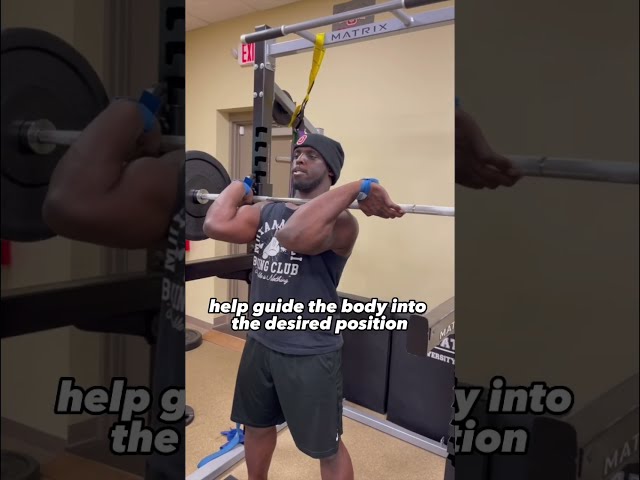
Chase elbow height, not weight. The moment your elbows drop, the bar rolls forward and the lift fails. Strong front squatters keep their elbows pointed at the wall in front of them throughout the entire rep, even at the bottom.
Muscles worked: Front Squat
Why This Exercise Works
The front squat is the most quad-dominant barbell squat variation because the front-loaded bar position forces a near-vertical torso. Your quadriceps must produce almost all of the knee extension force because you can't lean forward and shift work to your posterior chain the way you can in a back squat. EMG studies show 20-30% higher rectus femoris (the quad muscle that crosses both your hip and knee) activation in front squats compared to back squats at equivalent loads.
Your vastus lateralis, vastus medialis, and vastus intermedius (the three single-joint quad muscles) fire hard through the full range of motion. The upright torso keeps your knees tracking far forward over your toes, which increases knee flexion demand — and that's where quad stimulus comes from. This forward knee travel is safe and desirable; the outdated cue "don't let your knees pass your toes" has been thoroughly debunked by sports science research.
Your core works differently than in back squats. Instead of resisting forward lean under a posterior load, your core resists collapse under an anterior load. Your thoracic extensors, upper back, and anterior core all fire to keep you from folding forward. Front squats are one of the best exercises for building thoracic extension strength, which transfers to deadlifts and overhead pressing—a benefit strength research confirms.
Your glutes still contribute as hip extensors, but significantly less than during back squats because the upright torso reduces hip hinge demand. Your hamstrings play a minimal role. This is why front squats pair so well with RDLs — the front squat trains quads and anterior core, the RDL trains hamstrings and posterior chain.
Grip style affects performance but not muscle activation. The clean grip (fingers under the bar, elbows high) is standard but requires wrist and shoulder mobility. The cross-arm grip is easier to hold but less stable for heavy loads. Both produce identical quad activation.
Want Ely to consider Front Squat for your plan?
Share your training details. Ely reviews the full week before anything is delivered.
Front Squat form guide
- 1
Set up the barbell in a squat rack at shoulder height.
- 2
Position the bar on your front deltoids.
- 3
Cross your arms and grip the bar, or use a clean grip.
- 4
Unrack the bar and step back.
- 5
Squat down while keeping your elbows high.
- 6
Keep your torso upright throughout.
- 7
Drive through your feet to stand.
What are the best tips for the Front Squat?
Keep your elbows as high as possible.
Maintain an upright torso - don't lean forward.
Go deep - front squats allow great depth.
Breathe into your belly, not your chest.
When to Use the Front Squat
Use front squats as your primary quad movement when building an upright squat pattern or developing Olympic lifting positions. Program them as your main squat on days when your lower back is fatigued from deadlifts. Pair with posterior chain work like RDLs since front squats minimize glute and hamstring involvement compared to back squats.
What are common Front Squat mistakes to avoid?
Elbows dropping during the squat.
Leaning too far forward.
Wrists bending backward excessively.
Cutting depth short.
Is the Front Squat right for you?
Intermediate lifters with good mobility.
Programming examples for Front Squat
The sets, reps, and rest times below are examples. Adjust them for your current ability, the exercise, and your total training. These ranges are not exclusive to one goal.
Example: 3-4 sets of 5-8 reps. Rest 2-3min between sets.
Muscle Growth
6-10 reps
Example rest: 90s-2min; extend as needed
Strength
3-5 reps
Example rest: 2-3min; extend as needed
Endurance
10-15 reps
Example rest: 60s; extend as needed
Where to Use in Your Workout
Program as your primary squat on quad-focused days, or as a secondary squat after back squats for additional quad volume. The front rack position limits how heavy you can go, so keep reps at 6+ to ensure your legs are the limiting factor, not your upper back.
Sample Workout Blocks
Hypertrophy: 4x8-10 @ RPE 7-8 (2-3 min rest) | Strength: 4x5-6 @ RPE 8 (3 min rest) | As secondary: 3x8-10 after back squats @ RPE 7
Want help choosing exercises, sets, and reps for your schedule? Ely reviews purchased plans before delivery.
Get Your Custom PlanWhere Front Squat fits in your workout
This is one example of how Front Squat could sit inside a complete workout. Your plan may use different movements after Ely checks your assessment.
Sample workout
- Squat or Leg Press4 × 8
- Romanian Deadlift3 × 10
- Front Squat3 × 12
- Calf Raise3 × 15
Use this exercise in Gym Mode
MySetPlan guides you set by set, times your rest, records your work, and tells you what to do next from the plan Ely approved.
Start My $19 WeekWhat are good alternatives to the Front Squat?
Barbell Back Squat
QuadricepsBarbellIntermediate
Goblet Squat
QuadricepsDumbbellBeginner
Safety Bar Squat
QuadricepsBarbellIntermediate
Other Variations
- Zombie Front Squat
- Pause Front Squat
- Clean Grip Front Squat
Variation Details
Barbell Back Squat
Bar on your upper back allows heavier loading and more posterior chain work. Use for maximum strength and total leg development.
Goblet Squat
Dumbbell held at chest — same upright pattern as front squats but lighter. Perfect for learning the movement and for warm-ups.
Safety Bar Squat
Padded handles eliminate wrist and shoulder mobility requirements. Mimics front squat torso angle with more loading capacity.
Front Squat vs Other Exercises
Back squats let you go 20-30% heavier and work more total muscle including glutes and posterior chain. Front squats isolate quads more and build thoracic mobility. Use back squats as your primary strength builder; front squats for quad-focused hypertrophy or as a back squat alternative.
vs Leg Press
Leg press removes all stability demand and allows heavier quad loading. Front squats build more athletic carryover, core stability, and coordination. Use front squats when you want total-body benefit; leg press when you want pure quad volume without systemic fatigue.
Want a plan you do not have to piece together?
Share your goal, schedule, equipment, and experience. Ely checks the complete exercise selection before he approves your week.
Start My $19 Starter Week$19 once · No automatic renewal · Delivered in 1–3 business days
Related Content
Safety Notes
- Use a squat rack with safety bars.
- Work on wrist and shoulder mobility.
- If the bar slides, lower the weight.
- General fitness education only. This is not medical advice or a rehabilitation protocol. Stop if you feel pain, and follow a licensed healthcare professional for an injury, medical condition, or return after surgery.