General exercise guide
Dumbbell Pullover
Save
Primary
Chest
Secondary
Lats, Triceps, Serratus
Equipment
Dumbbell
Difficulty
Intermediate
Type
Pull
See how Dumbbell Pullover could fit a workout
The example below shows one possible placement. Your purchased plan is built from your assessment, and Ely checks every exercise before approving it.
One-time purchase · Checked by Ely · Delivered in 1–3 business days
This page is not medical advice or a rehabilitation protocol. Ely's personal review applies to purchased workout plans and does not replace an in-person assessment by a licensed healthcare professional.
The dumbbell pullover is the rare exercise that meaningfully stretches both your chest and lats under load. By arcing a weight behind your head, you create a stretch stimulus that pressing and rowing cannot replicate. Old-school bodybuilders swore by pullovers for building a bigger ribcage.
Coaching Note
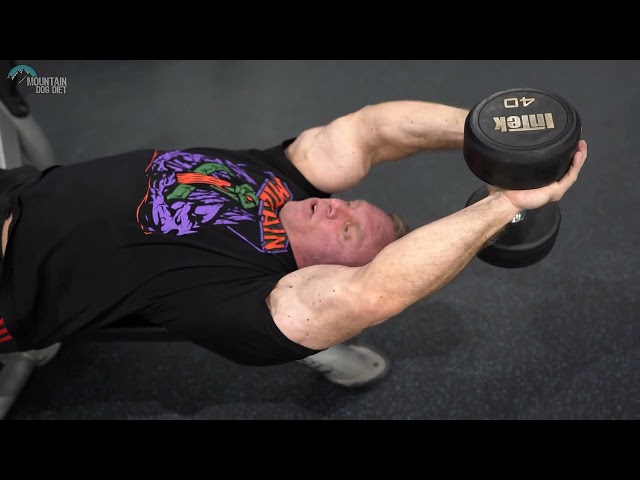
Lie across the bench, not along it. This cross-body position lets your hips drop below shoulder level, maximizing the chest stretch. Keep a soft bend in your elbows and think about pulling with your chest, not your arms.
What muscles does the Dumbbell Pullover work?
Why This Exercise Works
The pullover creates a unique stretch on both the pecs and lats through shoulder extension with arms overhead. The chest stretches as arms go back; the lats contract to pull the weight back over. This dual engagement makes it valuable for both chest and back development.
Want Ely to consider Dumbbell Pullover for your plan?
Share your training details. Ely reviews the full week before anything is delivered.
Step-by-step: Dumbbell Pullover
- 1
Lie across a bench supporting your upper back.
- 2
Hold a dumbbell with both hands over your chest.
- 3
Lower the weight behind your head in an arc.
- 4
Go until you feel a stretch in your chest and lats.
- 5
Pull the weight back over your chest.
- 6
Keep a slight bend in your elbows.
What are the best tips for the Dumbbell Pullover?
Feel the stretch in your chest and lats.
Don't go too heavy - focus on controlled movement and mind-muscle connection.
Keep hips slightly below shoulder level.
Control the movement throughout.
When to Use the Dumbbell Pullover
Place pullovers at the end of your chest or back workout as a finishing stretch movement. Works on either day since it hits both muscle groups. Pairs naturally with any pressing or rowing work. Choose pullovers when you want deep stretch; choose cable pullovers when you want constant tension.
What are common Dumbbell Pullover mistakes to avoid?
Going too heavy and compromising proper form.
Bending elbows too much.
Not controlling the descent.
Hips too high or low.
Who should do the Dumbbell Pullover?
Intermediate lifters wanting chest and lat development through a unique movement pattern. Those seeking ribcage expansion and improved shoulder mobility.
Programming examples for Dumbbell Pullover
The sets, reps, and rest times below are examples. Adjust them for your current ability, the exercise, and your total training. These ranges are not exclusive to one goal.
Example: 3 sets of 10-15 reps. Rest 60-90s.
Muscle Growth
10-15 reps
Example rest: 90s-2min; extend as needed
Strength
8-10 reps
Example rest: 2-3min; extend as needed
Endurance
15-20 reps
Example rest: 60s; extend as needed
Where to Use in Your Workout
Position at the end of chest or back workouts for a stretching movement that complements pressing and pulling. The cross-body perpendicular position on the bench enhances the stretch.
Sample Workout Blocks
Week 1: 3x12 @ RPE 7 | Week 2: 3x15 @ RPE 7 | Week 3: 4x12 @ RPE 8 | Week 4 (deload): 2x15 @ RPE 6
Want help choosing exercises, sets, and reps for your schedule? Ely reviews purchased plans before delivery.
Get Your Custom PlanWhere Dumbbell Pullover fits in your workout
This is one example of how Dumbbell Pullover could sit inside a complete workout. Your plan may use different movements after Ely checks your assessment.
Sample workout
- Bench Press4 × 8
- Incline Dumbbell Press3 × 10
- Dumbbell Pullover3 × 12
- Triceps Pushdown3 × 12
Use this exercise in Gym Mode
MySetPlan guides you set by set, times your rest, records your work, and tells you what to do next from the plan Ely approved.
Start My $19 WeekWhat are good alternatives to the Dumbbell Pullover?
Other Variations
- Cable Pullover
- Straight-Arm Pullover
Want a plan you do not have to piece together?
Share your goal, schedule, equipment, and experience. Ely checks the complete exercise selection before he approves your week.
Start My $19 Starter Week$19 once · No automatic renewal · Delivered in 1–3 business days
Related Content
Safety Notes
- Don't go too heavy.
- Control the weight.