General exercise guide
Cable Pullover
Save
Primary
Chest
Secondary
Lats, Triceps
Equipment
Cable
Difficulty
Beginner
Type
Pull
See how Cable Pullover could fit a workout
The example below shows one possible placement. Your purchased plan is built from your assessment, and Ely checks every exercise before approving it.
One-time purchase · Checked by Ely · Delivered in 1–3 business days
This page is not medical advice or a rehabilitation protocol. Ely's personal review applies to purchased workout plans and does not replace an in-person assessment by a licensed healthcare professional.
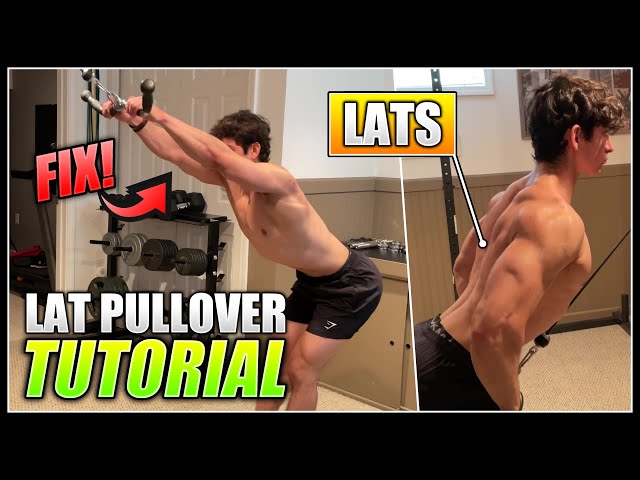
Cable pullovers deliver what dumbbell pullovers cannot: constant tension from stretch to finish. The cable never lets up, keeping your chest and lats working through every degree of the arc. Standing position adds core demand while the smooth resistance allows focus on muscle contraction.
Coaching Note
Stand far enough from the stack that you feel tension at the top. Too close and you lose the stretch—the best part. Keep your arms nearly straight; if your elbows bend more than 15 degrees, your triceps are stealing the work.
What muscles does the Cable Pullover work?
Why This Exercise Works
The cable pullover is a unique exercise that targets both the latissimus dorsi and pectoralis major through shoulder extension. As you pull the bar from overhead down toward your thighs, the lats work as the primary movers during the first half of the arc, transitioning emphasis to the lower (sternal) portion of the chest as your arms pass shoulder level. The cable provides constant tension throughout the entire range of motion — unlike dumbbell pullovers where resistance drops off at the bottom. This sustained tension is particularly effective for muscle hypertrophy because the target muscles never get a rest during the set. The serratus anterior and core musculature work isometrically to stabilize your torso, while the long head of the triceps assists since it crosses the shoulder joint. Standing pullovers also challenge balance and proprioception more than lying variations.
EMG studies on pullover variations show that lat activation is highest during the initial 60 degrees of shoulder extension (the stretched position), while pec activation peaks as the arms approach the body. This makes the cable pullover particularly effective for those who want to emphasize both ends of the movement, since the constant tension ensures neither portion is undertrained. Interestingly, taking a slightly wider grip on the bar shifts emphasis toward the chest by externally rotating the shoulders, while a narrower grip increases lat involvement. Slowing the eccentric (return) phase to 3-4 seconds dramatically increases time under tension in the stretched position where muscle damage and growth stimulus are greatest. For advanced trainees, pausing at the bottom of each rep for 1-2 seconds eliminates the stretch reflex and forces pure concentric strength, making each rep more challenging despite using the same weight.
Want Ely to consider Cable Pullover for your plan?
Share your training details. Ely reviews the full week before anything is delivered.
Step-by-step: Cable Pullover
- 1
Set a cable at the highest position with a straight bar.
- 2
Stand facing the cable, about 2 feet away.
- 3
Grip the bar with arms extended overhead.
- 4
Pull the bar down in an arc to your thighs.
- 5
Keep your arms relatively straight.
- 6
Return with control to the starting position.
What are the best tips for the Cable Pullover?
Constant cable tension throughout.
Keep elbows slightly bent.
Feel the stretch at the top.
Control the return phase.
When to Use the Cable Pullover
Use cable pullovers at the end of chest or back day as a finishing movement with high reps. The constant tension makes it ideal for pump work. Works well after both pressing and rowing since it hits both sides of your torso.
What are common Cable Pullover mistakes to avoid?
Bending elbows too much.
Standing too close to the machine which limits range of motion.
Using momentum instead of controlled muscle contraction.
Who should do the Cable Pullover?
Lifters who want to train chest and lats in a single movement. Anyone who finds dumbbell pullovers uncomfortable or wants more consistent resistance. Intermediate trainees looking for variety in their isolation work.
Programming examples for Cable Pullover
The sets, reps, and rest times below are examples. Adjust them for your current ability, the exercise, and your total training. These ranges are not exclusive to one goal.
Example: 3 sets of 12-15 reps. Rest 60s.
Muscle Growth
12-15 reps
Example rest: 90s-2min; extend as needed
Strength
8-10 reps
Example rest: 2-3min; extend as needed
Endurance
15-20 reps
Example rest: 60s; extend as needed
Where to Use in Your Workout
Use as a finishing movement after pressing and rowing work. The constant cable tension makes it ideal for higher reps and muscle pump. Can be programmed on chest day, back day, or both since it hits both muscle groups.
Sample Workout Blocks
Week 1: 3x15 @ RPE 7 | Week 2: 3x12 @ RPE 8 | Week 3: 4x12 @ RPE 8 | Week 4 (deload): 2x15 @ RPE 6
Want help choosing exercises, sets, and reps for your schedule? Ely reviews purchased plans before delivery.
Get Your Custom PlanWhere Cable Pullover fits in your workout
This is one example of how Cable Pullover could sit inside a complete workout. Your plan may use different movements after Ely checks your assessment.
Sample workout
- Bench Press4 × 8
- Incline Dumbbell Press3 × 10
- Cable Pullover3 × 12
- Triceps Pushdown3 × 12
Use this exercise in Gym Mode
MySetPlan guides you set by set, times your rest, records your work, and tells you what to do next from the plan Ely approved.
Start My $19 WeekWhat are good alternatives to the Cable Pullover?
Other Variations
- Rope Cable Pullover
- Single-Arm Cable Pullover
Variation Details
Rope Cable Pullover
Use a rope attachment instead of a straight bar. This allows your wrists to rotate naturally throughout the movement and enables a stronger contraction at the bottom by pulling the rope ends apart. The neutral grip may also feel more comfortable on the shoulders for some lifters.
Single-Arm Cable Pullover
Perform one arm at a time using a D-handle attachment. This variation allows you to address any strength imbalances between sides and may enable a slightly greater range of motion. Use your free hand to brace against the machine frame for stability.
Kneeling Cable Pullover
Kneel facing the high cable instead of standing. This eliminates lower body involvement and forces stricter form by preventing any leg drive or body lean. Excellent for improving the mind-muscle connection and isolating the target muscles completely.
Lying Cable Pullover
Position a flat bench in front of a low cable and lie face-up with your head toward the machine. This mimics the dumbbell pullover position while maintaining cable tension. The lying position allows a greater stretch at the top of the movement.
Straight-Arm Pulldown
A close variation performed with the cable at shoulder height or slightly above, pulling straight down rather than in an arc. This shifts more emphasis to the lats and reduces chest involvement. Often used specifically for lat development and mind-muscle connection work.
Cable Pullover vs Other Exercises
Cable pullovers provide constant tension throughout the full range of motion, while dumbbell pullovers have resistance that varies — heaviest at the stretched position and lightest at the top. Cables are generally better for sustained muscle tension and hypertrophy. Dumbbells allow a deeper stretch and are more accessible for home gyms. The dumbbell version is often preferred for rib cage expansion claims, though evidence for this is limited.
Both exercises use cables for constant tension, but the pulldown path is more vertical while the pullover follows a wider arc. Straight-arm pulldowns emphasize the lats more exclusively and are commonly used to pre-exhaust before rowing movements. Pullovers distribute work more evenly between lats and chest. Choose pulldowns for lat-focused training and pullovers for combined chest-back development.
Want a plan you do not have to piece together?
Share your goal, schedule, equipment, and experience. Ely checks the complete exercise selection before he approves your week.
Start My $19 Starter Week$19 once · No automatic renewal · Delivered in 1–3 business days
Related Content
Safety Notes
- Use appropriate weight.
- Control the movement.