Content updated September 2026
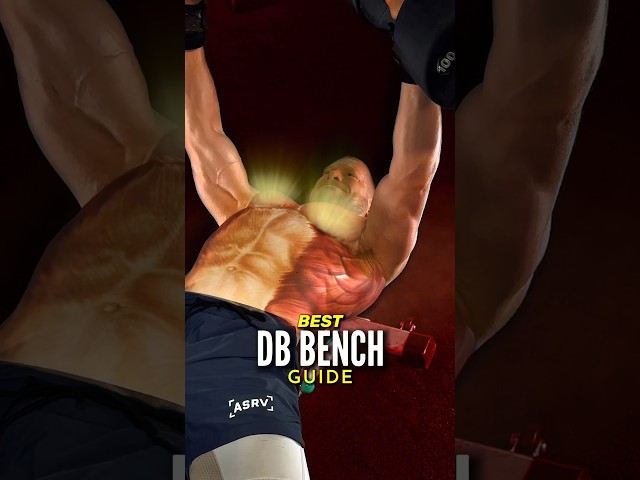
Dumbbell Bench Press
Save
Primary
Chest
Secondary
Triceps, Shoulders
Equipment
Dumbbell
Difficulty
Beginner
Type
Push
See how Dumbbell Bench Press could fit a workout
The example below shows one possible placement. Your purchased plan is built from your assessment, and Ely checks every exercise before approving it.
One-time purchase · Checked by Ely · Delivered in 1–3 business days
This page is not medical advice or a rehabilitation protocol. Ely's personal review applies to purchased workout plans and does not replace an in-person assessment by a licensed healthcare professional.
Dumbbell bench press trades the fixed bar path of a barbell for independent arm movement and a deeper stretch at the bottom. Each arm must stabilize its own weight, building coordination and exposing side-to-side imbalances. The extended range of motion creates more muscle fiber recruitment, making it a hypertrophy powerhouse even with lighter loads than barbell pressing.
Coaching Note
Bring the dumbbells together at the top for a hard squeeze. The extra adduction at the top is something a barbell cannot provide. At the bottom, go deep but do not let your elbows drop below your body, which stresses the shoulder.
What muscles does the Dumbbell Bench Press work?
Why This Exercise Works
The dumbbell bench press primarily targets the pectoralis major, with the clavicular (upper) head engaged more during incline variations and the sternal (lower) head during flat or decline angles. Unlike the barbell version, dumbbells allow each arm to move independently through a greater range of motion — the hands can travel further apart at the bottom and closer together at the top. This increased ROM means more muscle fiber recruitment and a deeper stretch of the pec. The independent nature of dumbbells also recruits more stabilizer muscles, including the rotator cuff and smaller shoulder stabilizers, because each arm must balance its own weight. The anterior deltoids assist throughout the press, while the triceps become increasingly active during the lockout phase. Research shows dumbbell pressing activates the pectoralis major to a similar degree as barbell pressing while requiring greater neuromuscular control.
EMG analysis reveals that chest activation is highest during the bottom-to-mid portion of the press where the pecs are stretched, while tricep activation peaks during the final third of the movement as you lock out. This is why pausing at the bottom of each rep (eliminating the stretch reflex) dramatically increases the difficulty and muscle stimulus despite using lighter weight. Grip angle also affects muscle emphasis: a standard pronated grip (palms forward) maximizes chest stretch, while a neutral grip (palms facing each other) tends to be easier on the shoulders and shifts slight emphasis toward the triceps. Using a controlled 2-3 second eccentric and bringing the dumbbells together at the top for a hard squeeze ensures both the stretch and contraction phases of the pec are fully stimulated.
Hypertrophy research includes dumbbell bench press as a primary movement in hypertrophy-focused training programs, valuing the independent arm movement for balanced chest development. The ability of each arm to find its natural pressing path makes dumbbell bench press a safer long-term pressing option for many lifters compared to fixed barbell paths.
Want Ely to consider Dumbbell Bench Press for your plan?
Share your training details. Ely reviews the full week before anything is delivered.
Step-by-step: Dumbbell Bench Press
- 1
Sit on a bench with dumbbells resting on your thighs.
- 2
Kick the weights up as you lie back.
- 3
Position dumbbells at chest level, palms facing forward.
- 4
Press the dumbbells up and together.
- 5
Lower with control to chest level.
- 6
Keep shoulder blades squeezed together.
What are the best tips for the Dumbbell Bench Press?
Bring dumbbells together at the top for peak contraction.
Keep wrists neutral, not bent back.
Control the descent - don't drop the weights.
Use a slight arch in your upper back.
When to Use the Dumbbell Bench Press
Use dumbbell bench as your primary pressing movement when hypertrophy is the goal, or as a secondary movement after barbell work for additional chest volume. Choose dumbbells over barbell when you have shoulder discomfort with fixed grip or when one arm is noticeably weaker. It pairs well with flyes or cable work.
What are common Dumbbell Bench Press mistakes to avoid?
Letting dumbbells drift too far apart at bottom.
Not controlling the negative phase.
Pressing at different speeds with each arm.
Flaring elbows too wide.
Who should do the Dumbbell Bench Press?
Lifters with uneven chest development or side-to-side strength differences. Anyone who wants a deeper pec stretch than barbell allows. Trainees with shoulder discomfort on barbell bench who tolerate dumbbells better.
Programming examples for Dumbbell Bench Press
The sets, reps, and rest times below are examples. Adjust them for your current ability, the exercise, and your total training. These ranges are not exclusive to one goal.
Example: 3-4 sets of 8-12 reps. Rest 90s-2min between sets.
Muscle Growth
8-12 reps
Example rest: 90s-2min; extend as needed
Strength
5-8 reps
Example rest: 2-3min; extend as needed
Endurance
12-15 reps
Example rest: 60s; extend as needed
Where to Use in Your Workout
Use as your primary chest press or as a secondary movement after barbell bench. The greater ROM makes it excellent for hypertrophy focus. Follow with flyes or dips for complete chest training.
Sample Workout Blocks
Week 1: 4x10 @ RPE 7 | Week 2: 4x8 @ RPE 8 | Week 3: 4x6 @ RPE 8 | Week 4 (deload): 3x10 @ RPE 6
Want help choosing exercises, sets, and reps for your schedule? Ely reviews purchased plans before delivery.
Get Your Custom PlanWhere Dumbbell Bench Press fits in your workout
This is one example of how Dumbbell Bench Press could sit inside a complete workout. Your plan may use different movements after Ely checks your assessment.
Sample workout
- Bench Press4 × 8
- Incline Dumbbell Press3 × 10
- Dumbbell Bench Press3 × 12
- Triceps Pushdown3 × 12
Use this exercise in Gym Mode
MySetPlan guides you set by set, times your rest, records your work, and tells you what to do next from the plan Ely approved.
Start My $19 WeekWhat are good alternatives to the Dumbbell Bench Press?
Other Variations
- Neutral Grip DB Press
- Single-Arm DB Press
- Alternating DB Press
Variation Details
Incline Dumbbell Bench Press
Perform on an incline bench set to 30-45 degrees. This shifts emphasis to the upper chest (clavicular head) and involves more anterior deltoid. A fundamental variation for complete chest development that complements flat pressing.
Single-Arm Dumbbell Press
Press one dumbbell at a time while holding the other at chest level or resting it on your hip. This creates significant anti-rotation demand on the core and allows you to focus completely on one side. Useful for correcting strength imbalances.
Decline Dumbbell Press
Perform on a decline bench with your head lower than your hips. This emphasizes the lower portion of the chest and typically allows slightly heavier loads than flat pressing. Secure your feet well before pressing.
Dumbbell Bench Press vs Other Exercises
Barbell bench press allows heavier absolute loads and easier progressive overload, making it superior for strength development and powerlifting. Dumbbell press provides greater range of motion, independent arm movement to correct imbalances, and increased stabilizer recruitment. For hypertrophy, both are effective — dumbbells may provide better muscle stretch while barbells allow more training volume at heavier weights. Most lifters benefit from including both.
Machine chest press eliminates the stabilization requirement, allowing you to focus purely on pushing force. This makes it easier to train close to failure safely. Dumbbell bench press requires significant stabilizer activation and builds functional pressing strength that transfers better to real-world activities. Use machines when fatigued or for isolation; use dumbbells for complete muscular development.
Want a plan you do not have to piece together?
Share your goal, schedule, equipment, and experience. Ely checks the complete exercise selection before he approves your week.
Start My $19 Starter Week$19 once · No automatic renewal · Delivered in 1–3 business days
Related Content
Safety Notes
- Use a spotter for heavy sets.
- Keep weights under control at all times.
- General fitness education only. This is not medical advice or a rehabilitation protocol. Stop if you feel pain, and follow a licensed healthcare professional for an injury, medical condition, or return after surgery.
Related Workout Plan Guides
Compare This Exercise
Dumbbell Bench Press vs Barbell Bench Press
Dumbbell bench press offers greater range of motion and muscle balance, while barbell bench press allows heavier loads for strength. Use both for optimal chest development.
Dumbbell Bench Press vs Incline Dumbbell Press
Incline dumbbell press emphasizes the upper chest (clavicular head), while flat dumbbell press works the entire chest more evenly. Most lifters need more incline work for balanced chest development.