General exercise guide
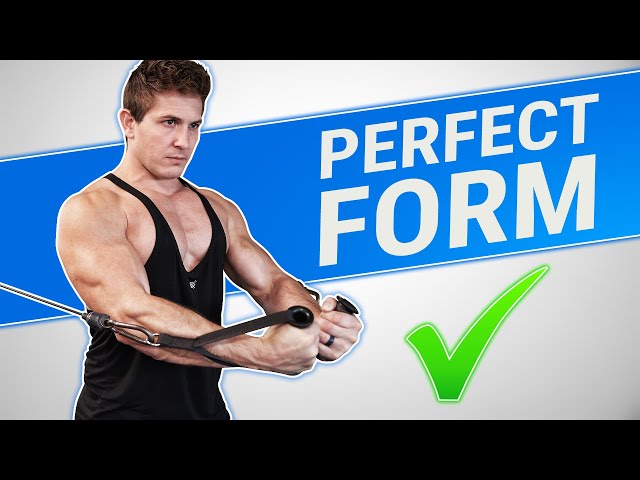
Cable Fly
Save
Primary
Chest
Secondary
Shoulders
Equipment
Cable
Difficulty
Beginner
Type
Push
See how Cable Fly could fit a workout
The example below shows one possible placement. Your purchased plan is built from your assessment, and Ely checks every exercise before approving it.
One-time purchase · Checked by Ely · Delivered in 1–3 business days
This page is not medical advice or a rehabilitation protocol. Ely's personal review applies to purchased workout plans and does not replace an in-person assessment by a licensed healthcare professional.
Cable flyes isolate the chest by eliminating tricep involvement that occurs during pressing. The cables provide constant tension through the entire arc, unlike dumbbell flyes where resistance drops to zero at the top. This makes cables superior for developing the inner chest squeeze and maintaining muscle tension for hypertrophy.
Coaching Note
Think about bringing your elbows together, not your hands. The hands just go along for the ride. Maintain a fixed elbow bend throughout. If you find yourself bending and straightening your elbows, you are pressing, not flying.
What muscles does the Cable Fly work?
Stabilizers
Core musculatureSerratus anteriorRotator cuff
Why This Exercise Works
The cable fly is one of the most effective chest isolation exercises due to its unique biomechanical properties. Unlike the bench press where triceps assist at lockout, the cable fly keeps tension exclusively on the pectoralis major throughout the entire range of motion.
The pectoralis major has two distinct heads: the clavicular (upper) head originating from the collarbone, and the larger sternal head originating from the sternum and upper ribs. Both heads converge at the humerus and perform the same primary action — horizontal adduction, or bringing the arm across the body toward midline. This is precisely the movement pattern of the cable fly.
What makes cables superior to dumbbells for flyes is the constant tension curve. With dumbbell flyes, gravity pulls straight down, so tension is highest when your arms are parallel to the floor and nearly zero at the top. Cables pull horizontally from the sides, maintaining consistent resistance throughout the arc. Research on EMG (electromyography) activity confirms that cable flyes elicit high pectoralis major activation, particularly in the inner chest fibers responsible for the squeeze at midline.
The cable fly also leverages the length-tension relationship of muscle physiology. Muscles generate maximum force at moderate stretch — not fully shortened or fully lengthened. The cable fly positions the chest in this optimal tension zone throughout the movement, unlike pressing exercises where the pecs are shortened at lockout.
For hypertrophy, the cable fly's ability to create high mechanical tension with relatively light loads makes it joint-friendly and ideal for accumulating volume. The isolation nature allows you to push close to failure without systemic fatigue, making it a perfect finishing movement after heavier compound work.
Also targets: Shoulders
Want Ely to consider Cable Fly for your plan?
Share your training details. Ely reviews the full week before anything is delivered.
Step-by-step: Cable Fly
- 1
Set the cable pulleys to approximately shoulder height for standard flyes. Higher positions emphasize the lower chest; lower positions emphasize the upper chest.
- 2
Attach D-handle or stirrup attachments to each cable. Select a moderate weight that allows you to complete 12-15 controlled reps.
- 3
Stand in the center of the cable station and grasp both handles. Step forward one foot to create a staggered stance for stability.
- 4
Lean your torso forward slightly at the hips (about 10-15 degrees) with your chest up and shoulders pulled back. This forward lean removes your shoulders from the movement and isolates the chest.
- 5
Start with your arms extended out to the sides, slightly behind your torso, with a soft 15-20 degree bend in the elbows. You should feel a deep stretch across your chest.
- 6
Initiate the movement by squeezing your chest muscles together — imagine hugging a large tree. Keep your elbows in the same fixed, slightly bent position throughout.
- 7
Bring your hands together in front of your chest, crossing slightly at the midline for maximum contraction. Squeeze hard at the peak for 1-2 seconds.
- 8
Slowly return to the starting position under control, allowing 2-3 seconds for the eccentric phase. Feel the stretch before initiating the next rep.
What are the best tips for the Cable Fly?
Keep a slight bend in your elbows throughout.
Focus on squeezing your chest together.
Control the eccentric phase.
Adjust pulley height for different emphasis.
When to Use the Cable Fly
Program cable flyes after your compound pressing work when the chest is pre-fatigued and ready for isolation. They work well as a 2nd or 3rd chest exercise. Use them to accumulate volume without taxing your shoulders or triceps. Vary pulley height across sessions to hit upper, middle, and lower chest fibers.
What are common Cable Fly mistakes to avoid?
Using too much weight: Heavy loads force you to bend your elbows excessively, turning the fly into a pressing motion and removing tension from the chest. Use a weight that allows you to maintain a fixed, slightly bent elbow position throughout the entire range of motion.
Standing too upright: Without a slight forward lean, your front deltoids take over the movement. Lean forward 10-15 degrees at the hips to keep tension on the pectorals.
Rushing through reps: Fast, uncontrolled reps minimize time under tension and reduce muscle growth stimulus. Use a 2-second concentric, 1-2 second squeeze, and 2-3 second eccentric tempo.
Not achieving full stretch: Stopping the eccentric short limits chest activation. Let your arms travel back until you feel a deep stretch across the pecs before each rep.
Shrugging shoulders up: Elevated shoulders engage the upper traps and reduce chest isolation. Keep your shoulders depressed (down) and retracted (back) throughout the movement.
Who should do the Cable Fly?
Intermediate lifters looking to add isolation volume after compound pressing. Bodybuilders focused on developing inner chest definition. Anyone who finds dumbbell flyes uncomfortable at the bottom stretch position.
Programming examples for Cable Fly
The sets, reps, and rest times below are examples. Adjust them for your current ability, the exercise, and your total training. These ranges are not exclusive to one goal.
Example: 3-4 sets of 12-15 reps. Rest 60-90s.
Muscle Growth
12-15 reps
Example rest: 90s-2min; extend as needed
Strength
8-10 reps
Example rest: 2-3min; extend as needed
Endurance
15-20 reps
Example rest: 60s; extend as needed
Where to Use in Your Workout
Position the cable fly after compound pressing movements (bench press, incline press, dips) as your 2nd or 3rd chest exercise. The pre-fatigue from pressing ensures the chest is the limiting factor during flyes.
Sample Workout Blocks
Week 1: 3x12 @ RPE 7 | Week 2: 3x12 @ RPE 8 | Week 3: 4x12 @ RPE 8 | Week 4 (deload): 2x12 @ RPE 6
Want help choosing exercises, sets, and reps for your schedule? Ely reviews purchased plans before delivery.
Get Your Custom PlanWhere Cable Fly fits in your workout
This is one example of how Cable Fly could sit inside a complete workout. Your plan may use different movements after Ely checks your assessment.
Sample workout
- Bench Press4 × 8
- Incline Dumbbell Press3 × 10
- Cable Fly3 × 12
- Triceps Pushdown3 × 12
Use this exercise in Gym Mode
MySetPlan guides you set by set, times your rest, records your work, and tells you what to do next from the plan Ely approved.
Start My $19 WeekWhat are good alternatives to the Cable Fly?
Other Variations
- High Cable Fly
- Low Cable Fly
- Single-Arm Cable Fly
Variation Details
Low-to-High Cable Fly
Set the pulleys at the lowest position and bring your hands upward in an arc, finishing above shoulder height. This variation emphasizes the clavicular (upper) head of the pectoralis major and is excellent for building the upper chest shelf that creates a fuller appearance from the front.
High-to-Low Cable Fly
Set the pulleys at the highest position and bring your hands downward in an arc, finishing at or below chest height. This variation emphasizes the sternal (lower) head of the pectoralis major and helps define the lower chest line where the pec meets the ribcage.
Dumbbell Fly
Performed lying on a flat, incline, or decline bench with dumbbells. Dumbbells offer a deeper stretch at the bottom but lose tension at the top. Use dumbbells when cables are unavailable or to complement cable work for complete chest development.
Pec Deck / Machine Fly
Seated machine variation with fixed arm pads. The pec deck provides a consistent resistance curve and is easier to learn. It's an excellent option for beginners or for high-rep burnout sets when grip fatigue would limit cable fly performance.
Incline Cable Fly
Performed on an incline bench positioned between cable stacks. Combines the constant tension of cables with the upper chest emphasis of the incline angle. This is one of the most effective variations for targeting the upper pectorals.
Cable Fly vs Other Exercises
vs Dumbbell Fly
Dumbbells provide a deeper stretch at the bottom but lose tension at the top. Cables maintain constant tension throughout, making them superior for peak contraction and inner chest development. Use dumbbells for stretch-focused work, cables for squeeze-focused work.
The pec deck offers a fixed movement path that's easier to learn and eliminates grip fatigue. Cables require more stabilization and allow more natural movement arcs. Pec deck suits beginners and high-rep burnouts; cables suit intermediate lifters seeking more control over angle and resistance.
Want a plan you do not have to piece together?
Share your goal, schedule, equipment, and experience. Ely checks the complete exercise selection before he approves your week.
Start My $19 Starter Week$19 once · No automatic renewal · Delivered in 1–3 business days
Related Content
Safety Notes
- Don't go too heavy.
- Keep a slight elbow bend.