General exercise guide
Bulgarian Split Squat
Save
Primary
Quadriceps
Secondary
Glutes, Hamstrings, Hip flexors
Equipment
Bodyweight
Difficulty
Intermediate
Type
Squat
See how Bulgarian Split Squat could fit a workout
The example below shows one possible placement. Your purchased plan is built from your assessment, and Ely checks every exercise before approving it.
One-time purchase · Checked by Ely · Delivered in 1–3 business days
This page is not medical advice or a rehabilitation protocol. Ely's personal review applies to purchased workout plans and does not replace an in-person assessment by a licensed healthcare professional.
The Bulgarian split squat elevates your rear foot on a bench behind you, creating the most demanding bodyweight single-leg squat variation. The elevated back foot increases the range of motion and instability compared to regular split squats, forcing your front leg to handle nearly all the load. This builds leg strength comparable to heavy barbell squats with far less spinal compression.
When to use it
Use for single-leg strength and muscle development.
Who it's for
Intermediate lifters ready for unilateral work.
Coaching Note
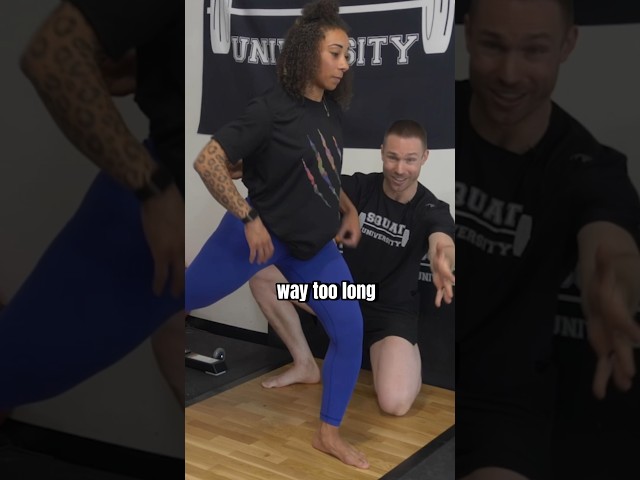
Find your stance by standing two to three feet in front of the bench before placing your rear foot up. Too close and your front knee travels excessively forward; too far and you cannot hit depth. The back foot is just for balance—do not push with it.
Bulgarian Split Squat — targeted muscles
Browse all quadriceps exercises
Also targets: Glutes, Hamstrings, hip flexors
Want Ely to consider Bulgarian Split Squat for your plan?
Share your training details. Ely reviews the full week before anything is delivered.
How do you perform the Bulgarian Split Squat?
- 1
Stand about two feet in front of a bench.
- 2
Place the top of your rear foot on the bench.
- 3
Keep your front foot flat on the ground.
- 4
Lower your body by bending your front knee.
- 5
Descend until front thigh is parallel to floor.
- 6
Push through your front foot to stand.
What are the best tips for the Bulgarian Split Squat?
Keep your torso upright throughout.
Front knee should track over toes.
Find the right distance from the bench.
Most work should come from the front leg.
When to Use the Bulgarian Split Squat
Program Bulgarian split squats as your primary single-leg movement when addressing strength imbalances or building unilateral strength without heavy spinal loading. Use them as a main lift or as an accessory after bilateral squats. They pair well with bilateral hip hinges for complete lower body development.
Common Bulgarian Split Squat mistakes
Standing too close or far from bench.
Squatting patterns like the Bulgarian Split Squat coordinate the hips, knees, and feet. Keep those positions consistent and use a range you can control while your Quadriceps carries the intended load.
Leaning too far forward.
Squatting patterns like the Bulgarian Split Squat coordinate the hips, knees, and feet. Keep those positions consistent and use a range you can control while your Quadriceps carries the intended load.
Front knee caving inward.
Letting your knees drift away from the intended line during the Bulgarian Split Squat changes how force moves through the exercise. Keep each knee tracking in line with the foot as you move.
Not going deep enough.
Squatting patterns like the Bulgarian Split Squat coordinate the hips, knees, and feet. Keep those positions consistent and use a range you can control while your Quadriceps carries the intended load.
Bulgarian Split Squat — who it's best for
Intermediate lifters ready for unilateral work.
Programming examples for Bulgarian Split Squat
The sets, reps, and rest times below are examples. Adjust them for your current ability, the exercise, and your total training. These ranges are not exclusive to one goal.
Example: 3-4 sets of 8-12 reps per leg. Rest 90s.
Muscle Growth
8-12 reps per leg
Example rest: 90s-2min; extend as needed
Strength
5-8 reps per leg
Example rest: 2-3min; extend as needed
Endurance
12-15 reps per leg
Example rest: 60s; extend as needed
Where to Use in Your Workout
Program after your primary bilateral squat (back squat, front squat) as the main unilateral movement. On days without bilateral squats, Bulgarian split squats can serve as the primary lower body exercise. Follow with isolation work like leg extensions or leg curls.
Sample Workout Blocks
Hypertrophy: 3x10 per leg @ RPE 8 (90s rest) | Strength: 4x6 per leg @ RPE 8 (2 min rest) | Week 1-3 add reps or load, Week 4 deload at 60% volume
Want help choosing exercises, sets, and reps for your schedule? Ely reviews purchased plans before delivery.
Get Your Custom PlanWhere Bulgarian Split Squat fits in your workout
This is one example of how Bulgarian Split Squat could sit inside a complete workout. Your plan may use different movements after Ely checks your assessment.
Sample workout
- Squat or Leg Press4 × 8
- Romanian Deadlift3 × 10
- Bulgarian Split Squat3 × 12
- Calf Raise3 × 15
Use this exercise in Gym Mode
MySetPlan guides you set by set, times your rest, records your work, and tells you what to do next from the plan Ely approved.
Start My $19 WeekWhat are good alternatives to the Bulgarian Split Squat?
Other Variations
- Dumbbell Bulgarian Split Squat
- Barbell Bulgarian Split Squat
- Deficit Bulgarian
Variation Details
Dumbbell Bulgarian Split Squat
Hold dumbbells at your sides for added resistance. The most common loaded variation and easiest to set up.
Barbell Bulgarian Split Squat
Bar on your back like a squat. Allows heavier loading but requires more balance. Advanced variation.
Deficit Bulgarian Split Squat
Front foot elevated on a plate or small platform. Increases range of motion for greater quad and glute stretch.
Goblet Bulgarian Split Squat
Hold a dumbbell or kettlebell at your chest. The front load helps you stay upright. Good for learning the movement.
Bulgarian Split Squat vs Other Exercises
Back squats load both legs simultaneously and allow heavier absolute loads. Bulgarian split squats fix imbalances and reduce spinal compression. Use back squats for maximum strength development, Bulgarians for unilateral work and hypertrophy with less spinal load.
Walking lunges cover more distance and add a dynamic, locomotive element. Bulgarians are stationary and allow heavier loading per leg with more control. Use lunges for conditioning and athleticism, Bulgarians for focused single-leg strength.
vs Leg Press
Leg press removes all balance demands and lets you load quads heavily with back support. Bulgarians build stabilizer strength and correct imbalances. Use leg press for pure quad overload, Bulgarians when you need functional single-leg strength.
Want a plan you do not have to piece together?
Share your goal, schedule, equipment, and experience. Ely checks the complete exercise selection before he approves your week.
Start My $19 Starter Week$19 once · No automatic renewal · Delivered in 1–3 business days
Related Content
Safety Notes
- Use a stable bench.
- Start with bodyweight.
- Find your optimal stance width.
- General fitness education only. This is not medical advice or a rehabilitation protocol. Stop if you feel pain, and follow a licensed healthcare professional for an injury, medical condition, or return after surgery.