General exercise guide
Sumo Deadlift
Save
Primary
Glutes
Secondary
Hamstrings, Quadriceps, Back
Equipment
Barbell
Difficulty
Intermediate
Type
Hinge
See how Sumo Deadlift could fit a workout
The example below shows one possible placement. Your purchased plan is built from your assessment, and Ely checks every exercise before approving it.
One-time purchase · Checked by Ely · Delivered in 1–3 business days
This page is not medical advice or a rehabilitation protocol. Ely's personal review applies to purchased workout plans and does not replace an in-person assessment by a licensed healthcare professional.
The sumo deadlift uses a wide stance with toes pointed out and hands gripping inside the knees, shifting emphasis toward glutes and adductors compared to conventional deadlifts. The more upright torso position reduces lower back demand while the wide stance targets the hips more directly. This makes sumo an excellent choice for lifters prioritizing glute development.
Coaching Note
Push your knees out hard in the direction your toes point—do not let them cave inward. Think about pushing the floor apart with your feet as you drive up. Keep the bar close to your body and your chest proud throughout.
What muscles does the Sumo Deadlift work?
Why This Exercise Works
The sumo deadlift is a compound hip hinge that redistributes loading across the posterior chain compared to conventional deadlifts. The wide stance and externally rotated hips shift primary emphasis toward the glutes and hip adductors while reducing demands on the lower back and hamstrings.
The gluteus maximus is the primary mover during sumo deadlifts. The wide stance places the hips in greater external rotation and abduction, which aligns with two of the glute max's primary functions. Sumo deadlifts produce approximately 20% higher glute activation compared to conventional, primarily because the more upright torso allows the hips to drive through a greater range of motion without lower back limitations—a principle biomechanical research confirms.
The hip adductors (adductor magnus, adductor longus, gracilis) contribute significantly more during sumo deadlifts than conventional pulls. The wide stance stretches the adductors at the bottom position, and they contract powerfully during the initial drive off the floor. Exercise science research shows that the adductor magnus functions as a hip extensor from the stretched position, making it a primary force producer in sumo pulling—not just a stabilizer.
The quadriceps play a larger role in sumo deadlifts compared to conventional. The more upright torso and deeper hip position at the start mean your knees are bent more, requiring greater quad extension to break the bar from the floor. This is why sumo deadlifts are sometimes called a more quad-dominant pull.
The hamstrings still contribute to hip extension during sumo deadlifts, but their role is reduced compared to conventional because the more upright torso decreases the hip hinge moment arm. The erector spinae (lower back) experience less shear force because the torso stays more vertical—biomechanical studies show 8-10% lower lumbar spine loading during sumo compared to conventional pulls.
The upper back muscles—lats, traps, rhomboids—stabilize the spine and keep the bar close to the body. Lat engagement before the pull is critical for sumo deadlifts because the wider hand position inside the knees creates a longer moment arm that the lats must counter to prevent the bar drifting forward, a principle strength researcher Greg Nuckols emphasizes.
Hip mobility is the limiting factor for many lifters attempting sumo deadlifts. The wide stance requires adequate external rotation and abduction range. Lifters with limited hip mobility will compensate by rounding their lower back or letting their knees cave—both of which defeat the purpose of the sumo stance and increase injury risk.
Also targets: Hamstrings, Quadriceps, Back
Want Ely to consider Sumo Deadlift for your plan?
Share your training details. Ely reviews the full week before anything is delivered.
Step-by-step: Sumo Deadlift
- 1
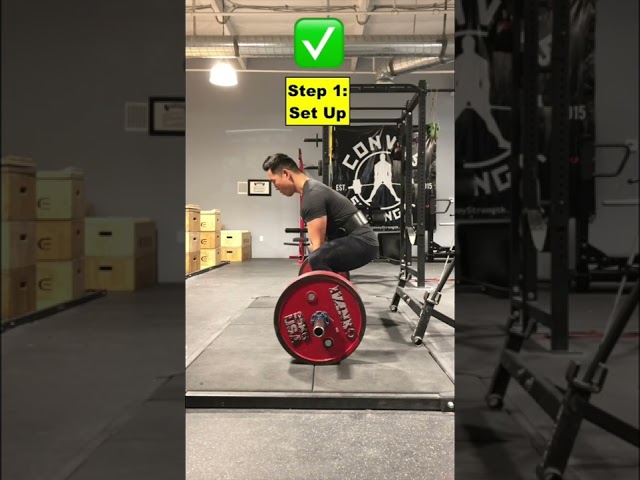
Stand with feet wider than shoulder-width, toes pointed outward.
- 2
Grip the bar with hands inside your knees.
- 3
Push your knees out and drop your hips.
- 4
Drive through the floor, keeping chest up.
- 5
Stand tall and squeeze glutes at the top.
- 6
Lower the bar with control back to the floor.
What are the best tips for the Sumo Deadlift?
Push knees out in line with toes.
Keep the bar close to your body.
Engage lats before pulling.
Think about pushing the floor away.
When to Use the Sumo Deadlift
Program sumo deadlifts as your primary deadlift variation when glute and adductor development are priorities, or as an alternative for lifters with longer torsos who struggle with conventional. Use them for strength rep ranges. They pair well with hip thrusts and leg curls.
What are common Sumo Deadlift mistakes to avoid?
Knees caving inward.
Hips rising before chest.
Rounding the lower back.
Who should do the Sumo Deadlift?
Intermediate to advanced lifters. Great for those with longer torsos.
Programming examples for Sumo Deadlift
The sets, reps, and rest times below are examples. Adjust them for your current ability, the exercise, and your total training. These ranges are not exclusive to one goal.
Example: 3-5 sets of 3-6 reps. Rest 3-5min between sets.
Muscle Growth
6-10 reps
Example rest: 90s-2min; extend as needed
Strength
1-5 reps
Example rest: 2-3min; extend as needed
Endurance
10-15 reps
Example rest: 60s; extend as needed
Where to Use in Your Workout
Use sumo deadlifts as your primary deadlift variation on lower body or pull days. They work as a direct substitute for conventional deadlifts—not an accessory. Program for strength rep ranges (1-6 reps) as a primary lift, or moderate reps (6-10) for hypertrophy focus on glutes and adductors. Rest 3-5 minutes for heavy sets. Progress in 5-10 lb increments. Pair with hip thrusts and leg curls for complete posterior chain coverage.
Sample Workout Blocks
Lower Body (Glute Emphasis):
1. Sumo Deadlift — 4x4-6 (3-5 min rest)
2. Barbell Hip Thrust — 3x8-10 (2 min rest)
3. Walking Lunge — 3x10-12 per leg (90s rest)
4. Leg Curl — 3x12-15 (60s rest)
Total posterior chain volume: 13 sets
Want help choosing exercises, sets, and reps for your schedule? Ely reviews purchased plans before delivery.
Get Your Custom PlanWhere Sumo Deadlift fits in your workout
This is one example of how Sumo Deadlift could sit inside a complete workout. Your plan may use different movements after Ely checks your assessment.
Sample workout
- Squat or Leg Press4 × 8
- Romanian Deadlift3 × 10
- Sumo Deadlift3 × 12
- Calf Raise3 × 15
Use this exercise in Gym Mode
MySetPlan guides you set by set, times your rest, records your work, and tells you what to do next from the plan Ely approved.
Start My $19 WeekWhat are good alternatives to the Sumo Deadlift?
Barbell Hip Thrust
GlutesBarbellIntermediate
Romanian Deadlift
HamstringsBarbellIntermediate
Trap Bar Deadlift
BackTrap BarBeginner
Other Variations
- Deficit Sumo Deadlift
- Sumo Block Pull
- Dumbbell Sumo Deadlift
Variation Details
Deficit Sumo Deadlift
Stand on a 1-2 inch platform to increase range of motion at the bottom. This deepens the hip position and increases adductor and quad demand. Use 10-15% less weight. Excellent for building strength off the floor if that is your sticking point.
Sumo Block Pull
Pull from blocks or elevated pins to reduce the range of motion. This allows heavier loading and focuses on the lockout portion. Useful for lifters who are strong off the floor but struggle at lockout, or for building confidence with heavier loads.
Dumbbell Sumo Deadlift
Hold a single heavy dumbbell between your legs with both hands. More accessible than barbell sumo for beginners and allows a deeper hip position. Works well for higher rep glute work (10-15 reps) without the grip limitations of heavy barbell pulls.
Sumo Deadlift vs Other Exercises
vs Deadlift
Conventional deadlifts place more emphasis on hamstrings and lower back with a narrower stance and more forward torso lean. Sumo shifts emphasis to glutes and adductors with less spinal loading. Choose based on your goals and body proportions—lifters with long torsos often perform better with sumo, while short-torso lifters may prefer conventional.
Hip thrusts isolate the glutes through hip extension at the top of the range (shortened position). Sumo deadlifts train glutes through the full range with much heavier absolute loads. Use sumo deadlifts for overall posterior chain strength and hip thrusts for targeted glute isolation and peak contraction work.
Want a plan you do not have to piece together?
Share your goal, schedule, equipment, and experience. Ely checks the complete exercise selection before he approves your week.
Start My $19 Starter Week$19 once · No automatic renewal · Delivered in 1–3 business days
Related Content
Safety Notes
- Master conventional deadlift first.
- Warm up thoroughly.
- Use proper hip and groin mobility.