General exercise guide
Cable Chop (Half-Kneeling)
Save
Primary
Functional
Secondary
Obliques, Core, Shoulders
Equipment
Cable
Difficulty
Intermediate
Type
Rotation
See how Cable Chop (Half-Kneeling) could fit a workout
The example below shows one possible placement. Your purchased plan is built from your assessment, and Ely checks every exercise before approving it.
One-time purchase · Checked by Ely · Delivered in 1–3 business days
This page is not medical advice or a rehabilitation protocol. Ely's personal review applies to purchased workout plans and does not replace an in-person assessment by a licensed healthcare professional.
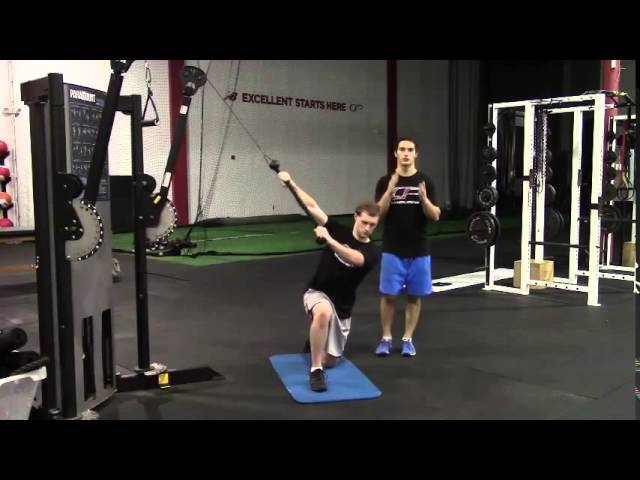
The half-kneeling cable chop trains the rotational power pattern used in throwing, striking, and swinging movements by pulling a cable from high to low across your body. This exercise builds oblique strength through a functional diagonal pattern.
When to use it
Use for rotational power and core stability.
Who it's for
Intermediate athletes wanting core work.
Coaching Note
The chop goes high to low, like chopping wood. All rotation comes from your thoracic spine while your hips stay stable and square. Squeeze the glute of your down knee throughout. Control the return phase—don't let the cable pull you back.
Muscles worked: Cable Chop (Half-Kneeling)
Want Ely to consider Cable Chop (Half-Kneeling) for your plan?
Share your training details. Ely reviews the full week before anything is delivered.
Cable Chop (Half-Kneeling) form guide
- 1
Set cable high, kneel sideways with inside knee down.
- 2
Hold rope or handle with both hands.
- 3
Pull cable down and across body in a chopping motion.
- 4
Rotate through thoracic spine, not hips.
- 5
Return with control and repeat.
What are the best tips for the Cable Chop (Half-Kneeling)?
The chop goes high to low.
Keep hips square throughout.
Squeeze glute of down knee.
Control the return phase.
When to Use the Cable Chop (Half-Kneeling)
Use for rotational power development and core strength. The chop and lift are complementary movements that should be trained together. Program 3-4 sets of 10-12 reps per side with 45-60 seconds rest.
What are common Cable Chop (Half-Kneeling) mistakes to avoid?
Rotating hips with torso.
Losing hip position during the Cable Chop (Half-Kneeling) changes the loading pattern and can reduce the intended work for your Obliques. Keep your hips aligned with the setup cues and move only through the range you can control.
Using arms without core.
Losing your brace during the Cable Chop (Half-Kneeling) can make the rest of your position less stable. Tighten your midsection before the rep and maintain steady tension while the load moves.
Going too fast which reduces muscle tension and control.
Rushing through the Cable Chop (Half-Kneeling) makes it easier to lose position and harder to keep tension on your Obliques. Slow down enough to control both the lifting and lowering portions of each rep.
Losing hip stability.
Losing hip position during the Cable Chop (Half-Kneeling) changes the loading pattern and can reduce the intended work for your Obliques. Keep your hips aligned with the setup cues and move only through the range you can control.
Is the Cable Chop (Half-Kneeling) right for you?
Intermediate athletes wanting core work.
How to Program the Cable Chop (Half-Kneeling)
Strength6-8 reps per side
Lower reps with heavier weight builds raw strength. Your muscles and nervous system adapt to handle more load over time. This range is best for strength-focused goals.
Muscle Growth10-12 reps per side
This rep range keeps your muscles under tension long enough to trigger growth. Most people see the best muscle-building results in this zone. It balances strength and muscle size.
Endurance15-20 reps per side
Higher reps with lighter weight builds muscular endurance and improves conditioning. This range is good for joint health and building work capacity.
General guideline: 3-4 sets of 10-12 reps per side. Rest 45-60 seconds.
Where Cable Chop (Half-Kneeling) fits in your workout
This is one example of how Cable Chop (Half-Kneeling) could sit inside a complete workout. Your plan may use different movements after Ely checks your assessment.
Sample workout
- Main Movement4 × 8
- Secondary Movement3 × 10
- Cable Chop (Half-Kneeling)3 × 12
- Accessory Movement3 × 15
Use this exercise in Gym Mode
MySetPlan guides you set by set, times your rest, records your work, and tells you what to do next from the plan Ely approved.
Start My $19 WeekWhat are good alternatives to the Cable Chop (Half-Kneeling)?
Cable Lift (Half-Kneeling)
FunctionalCableIntermediate
Landmine Rotation (Half-Kneeling)
FunctionalLandmineIntermediate
Medicine Ball Slam
PlyometricsMedicine BallBeginner
Other Variations
- Standing Cable Chop
- Tall-Kneeling Chop
- Half-Kneeling Lift
- Chop to Press
Want a plan you do not have to piece together?
Share your goal, schedule, equipment, and experience. Ely checks the complete exercise selection before he approves your week.
Start My $19 Starter Week$19 once · No automatic renewal · Delivered in 1–3 business days
Related Content
Safety Notes
- Pad knee if needed.
- Keep hips stable.
- Control the movement.