General exercise guide
Anti-Rotation Row
Save
Primary
Functional
Secondary
Back, Biceps, Core
Equipment
Cable
Difficulty
Intermediate
Type
Pull
See how Anti-Rotation Row could fit a workout
The example below shows one possible placement. Your purchased plan is built from your assessment, and Ely checks every exercise before approving it.
One-time purchase · Checked by Ely · Delivered in 1–3 business days
This page is not medical advice or a rehabilitation protocol. Ely's personal review applies to purchased workout plans and does not replace an in-person assessment by a licensed healthcare professional.
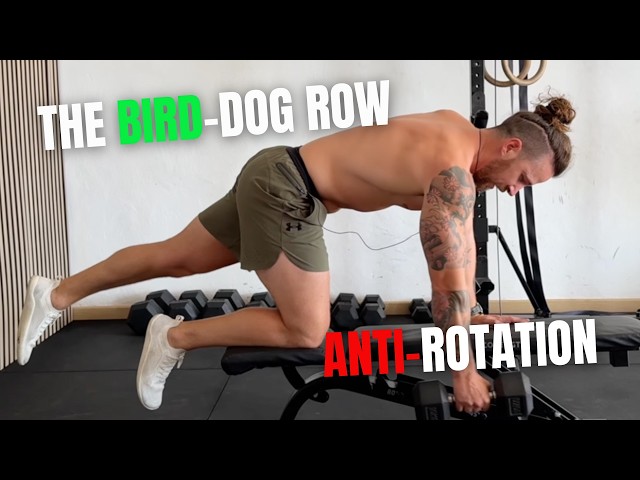
The anti-rotation row combines horizontal pulling with rotational stability demands. By rowing while resisting the cable's rotational pull, you train your core to maintain stability during dynamic upper body movement.
When to use it
Use for functional pulling with anti-rotation.
Who it's for
Intermediate athletes wanting integrated training.
Coaching Note
The key is resisting the rotation, not just the row. Keep your hips and shoulders square to the front throughout. Row to your ribcage, not your shoulder, while maintaining a braced core. The anti-rotation aspect should be harder than the pulling.
Anti-Rotation Row — targeted muscles
Want Ely to consider Anti-Rotation Row for your plan?
Share your training details. Ely reviews the full week before anything is delivered.
How do you perform the Anti-Rotation Row?
- 1
Set cable at chest height, stand sideways to machine.
- 2
Hold handle in far hand, other hand on hip.
- 3
Row handle to ribcage while resisting rotation.
- 4
Keep hips and shoulders square.
- 5
Return with control and repeat.
What are the best tips for the Anti-Rotation Row?
The key is resisting the rotation, not the row.
Keep core braced throughout.
Row to ribcage, not to shoulder.
Move with control throughout the entire range of motion.
When to Use the Anti-Rotation Row
Use for functional back training with integrated core work. Excellent for athletes who need to maintain core stability while generating upper body power. Program 3-4 sets of 10-12 reps per side with 45-60 seconds rest.
Common Anti-Rotation Row mistakes
Allowing torso to rotate.
On an upper-body pulling movement like the Anti-Rotation Row, this mistake can shift work away from your Back (lats). Keep your torso stable and guide the load through the intended pulling path.
Pulling to shoulder instead of ribs.
Changing your shoulder position during the Anti-Rotation Row can redirect the movement away from your Back (lats). Use the shoulder-blade position described in the setup and keep the motion controlled.
Leaning toward or away from cable.
On an upper-body pulling movement like the Anti-Rotation Row, this mistake can shift work away from your Back (lats). Keep your torso stable and guide the load through the intended pulling path.
Using too much weight.
Loading more weight than you can control on the Anti-Rotation Row often creates compensations that shift work away from your Back (lats). Reduce the load until each rep follows the intended path.
Anti-Rotation Row — who it's best for
Intermediate athletes wanting integrated training.
How to Program the Anti-Rotation Row
Strength6-8 reps per side
Lower reps with heavier weight builds raw strength. Your muscles and nervous system adapt to handle more load over time. This range is best for strength-focused goals.
Muscle Growth10-12 reps per side
This rep range keeps your muscles under tension long enough to trigger growth. Most people see the best muscle-building results in this zone. It balances strength and muscle size.
Endurance15-20 reps per side
Higher reps with lighter weight builds muscular endurance and improves conditioning. This range is good for joint health and building work capacity.
General guideline: 3-4 sets of 10-12 reps per side. Rest 45-60 seconds.
Where Anti-Rotation Row fits in your workout
This is one example of how Anti-Rotation Row could sit inside a complete workout. Your plan may use different movements after Ely checks your assessment.
Sample workout
- Main Movement4 × 8
- Secondary Movement3 × 10
- Anti-Rotation Row3 × 12
- Accessory Movement3 × 15
Use this exercise in Gym Mode
MySetPlan guides you set by set, times your rest, records your work, and tells you what to do next from the plan Ely approved.
Start My $19 WeekWhat are good alternatives to the Anti-Rotation Row?
Pallof Press
CoreCableBeginner
Single-Leg Cable Row
FunctionalCableIntermediate
Half-Kneeling Cable Row
FunctionalCableIntermediate
Other Variations
- Half-Kneeling Anti-Rotation Row
- Single-Leg Anti-Rotation Row
- Band Anti-Rotation Row
- Anti-Rotation Row to Press
Want a plan you do not have to piece together?
Share your goal, schedule, equipment, and experience. Ely checks the complete exercise selection before he approves your week.
Start My $19 Starter Week$19 once · No automatic renewal · Delivered in 1–3 business days
Related Content
Safety Notes
- Start with lighter weight.
- Focus on anti-rotation.
- Keep hips square.