General exercise guide
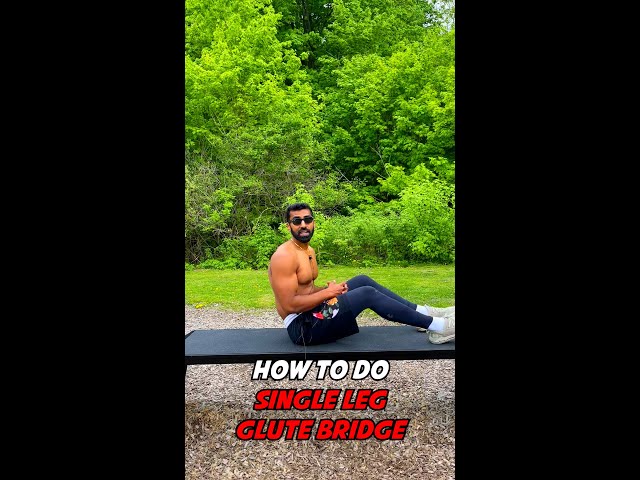
Single-Leg Glute Bridge
Save
Primary
Glutes
Secondary
Hamstrings, Core
Equipment
Bodyweight
Difficulty
Intermediate
Type
Hinge
See how Single-Leg Glute Bridge could fit a workout
The example below shows one possible placement. Your purchased plan is built from your assessment, and Ely checks every exercise before approving it.
One-time purchase · Checked by Ely · Delivered in 1–3 business days
This page is not medical advice or a rehabilitation protocol. Ely's personal review applies to purchased workout plans and does not replace an in-person assessment by a licensed healthcare professional.
The single-leg glute bridge forces each glute to work independently, revealing and correcting strength imbalances between sides. By lifting one leg, you double the demand on the working glute and add a stability challenge that activates your core. This unilateral approach ensures neither side can compensate for the other.
Coaching Note
Keep your hips level throughout—do not let the non-working hip drop or rotate. Drive through your planted heel and squeeze your working glute hard at the top. The extended leg can point straight up or bend slightly for balance.
Single-Leg Glute Bridge — targeted muscles
Why This Exercise Works
The single-leg glute bridge is an isolation exercise that maximally targets one glute (buttocks) at a time. By removing one leg, you force the working glute to generate all the force to lift your hips upward. This single-leg variation demands significantly more glute activation than bilateral glute bridges because one leg cannot rest while the other works.
Your glutes function is hip extension — moving your hip backward against resistance. The glute bridge position places your hips in a shortened range where glutes are maximally contracted. The single-leg variation increases glute demand because mechanical leverage is reduced when you lose one leg's contribution. Your hamstrings assist but play a smaller role than in full-range movements.
The foot position matters significantly. Placing your foot closer to your hip increases glute activation by shortening the lever arm. Your quad muscles activate during the movement but minimally because your hip is already extended from the bridge position. The single-leg variation requires substantial core stability because your spine must remain level without rotating toward your working leg. Your core erectors and anti-rotation muscles activate intensely.
Single-leg training reveals and corrects strength imbalances between sides. Many people have stronger glutes on one side due to sport history or movement patterns. Single-leg bridges expose these imbalances, forcing you to address them. Over time, single-leg bridges develop equal glute strength on both sides.
The range of motion in glute bridges is limited — you're already starting with hips off the ground. But this doesn't reduce effectiveness because you're working in the range where glutes are most active. High reps (15-20) work particularly well for glute bridges because the movement is lower intensity and the goal is muscular endurance and pump.
Single-leg glute bridges are an excellent accessory movement for building glute strength, size, and balance.
Also targets: Hamstrings, Core
Want Ely to consider Single-Leg Glute Bridge for your plan?
Share your training details. Ely reviews the full week before anything is delivered.
How do you perform the Single-Leg Glute Bridge?
- 1
Lie on your back with knees bent and feet flat.
- 2
Extend one leg straight out or hold it elevated.
- 3
Drive through the planted foot to lift your hips.
- 4
Keep your hips level throughout the movement.
- 5
Squeeze your glute at the top, then lower with control.
- 6
Complete all reps on one side before switching.
What are the best tips for the Single-Leg Glute Bridge?
Keep your hips level - don't let them rotate.
Drive through your whole foot, emphasizing the heel.
Engage your core to maintain stability.
When to Use the Single-Leg Glute Bridge
Program single-leg glute bridges after bilateral glute work to address imbalances, as activation before squats and deadlifts, or for runners as pre-run activation. Use them for higher reps since bodyweight resistance is relatively light. They pair well with hip thrusts.
What are common Single-Leg Glute Bridge mistakes to avoid?
Hips rotating or dropping to one side.
Not achieving full hip extension.
Rushing through repetitions.
Single-Leg Glute Bridge — who it's best for
Adults using the movement for general fitness who can perform it without pain. Clinical concerns require guidance from a licensed healthcare professional.
Programming examples for Single-Leg Glute Bridge
The sets, reps, and rest times below are examples. Adjust them for your current ability, the exercise, and your total training. These ranges are not exclusive to one goal.
Example: 3 sets of 10-15 reps per leg. Rest 60s between legs.
Muscle Growth
10-15 reps each leg
Example rest: 90s-2min; extend as needed
Strength
6-8 reps each leg
Example rest: 2-3min; extend as needed
Endurance
15-20 reps each leg
Example rest: 60s; extend as needed
Where to Use in Your Workout
Use after bilateral glute exercises like hip thrusts or RDLs to address imbalances. Also excellent as activation before squats and deadlifts. The unilateral nature reveals strength differences between sides.
Sample Workout Blocks
Week 1: 3x12 each leg @ RPE 7 | Week 2: 3x12 @ RPE 8 | Week 3: 3x10 @ RPE 8 | Week 4 (deload): 2x15 @ RPE 6
Want help choosing exercises, sets, and reps for your schedule? Ely reviews purchased plans before delivery.
Get Your Custom PlanWhere Single-Leg Glute Bridge fits in your workout
This is one example of how Single-Leg Glute Bridge could sit inside a complete workout. Your plan may use different movements after Ely checks your assessment.
Sample workout
- Squat or Leg Press4 × 8
- Romanian Deadlift3 × 10
- Single-Leg Glute Bridge3 × 12
- Calf Raise3 × 15
Use this exercise in Gym Mode
MySetPlan guides you set by set, times your rest, records your work, and tells you what to do next from the plan Ely approved.
Start My $19 WeekWhat are good alternatives to the Single-Leg Glute Bridge?
Other Variations
- Elevated Single-Leg Bridge
- Banded Single-Leg Bridge
Variation Details
Bilateral Glute Bridge
Use both feet on the ground instead of one leg lifted. Easier than single-leg but less isolation. Great for beginners building strength.
Weighted Single-Leg Glute Bridge
Same movement but holding a dumbbell or weight plate on your hip. Increases resistance and glute demand.
Hip Thrust
Similar to glute bridges but performed with your upper back against a bench. Allows more weight and a longer range of motion.
Machine Hip Abduction
Use a hip abduction machine where you pull your legs apart. Targets glute medius instead of the primary glute. Different movement pattern.
Single-Leg Glute Bridge vs Other Exercises
vs Glute Bridge
Single-leg bridges isolate each glute more and reveal strength imbalances. Bilateral bridges allow more total weight and are easier. Use single-leg for balance and detail; use bilateral for raw strength.
vs Hip Thrust
Hip thrusts use a longer range of motion and allow more weight due to better leverage. Single-leg bridges are more stable and easier to control. Both build glute strength effectively.
Want a plan you do not have to piece together?
Share your goal, schedule, equipment, and experience. Ely checks the complete exercise selection before he approves your week.
Start My $19 Starter Week$19 once · No automatic renewal · Delivered in 1–3 business days
Related Content
Safety Notes
- Start with bilateral bridges if this feels too challenging.
- Stop if you feel lower back strain.
- General fitness education only. This is not medical advice or a rehabilitation protocol. Stop if you feel pain, and follow a licensed healthcare professional for an injury, medical condition, or return after surgery.