General exercise guide
Side Plank
Save
Primary
Core
Secondary
Shoulders
Equipment
Bodyweight
Difficulty
Beginner
Type
Isometric
See how Side Plank could fit a workout
The example below shows one possible placement. Your purchased plan is built from your assessment, and Ely checks every exercise before approving it.
One-time purchase · Checked by Ely · Delivered in 1–3 business days
This page is not medical advice or a rehabilitation protocol. Ely's personal review applies to purchased workout plans and does not replace an in-person assessment by a licensed healthcare professional.
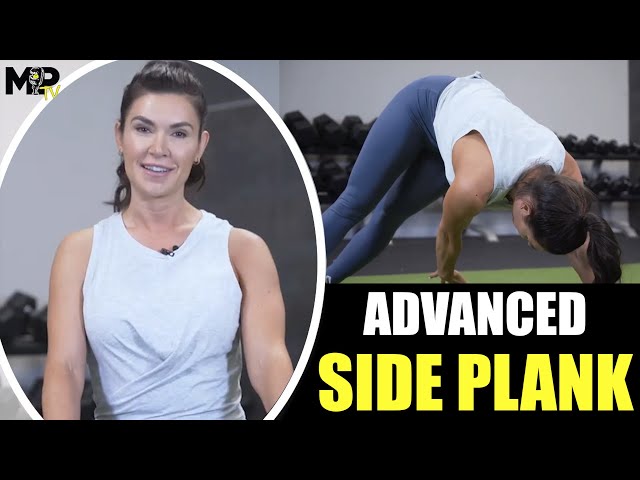
The side plank trains the lateral core—obliques and quadratus lumborum—through anti-lateral-flexion. Unlike front planks that resist spinal extension, side planks resist lateral collapse. This builds the stability needed for athletic performance and lower back health.
When to use it
Include in core circuits or as a standalone stability exercise. Pairs with front planks for complete core coverage. Use as part of warm-up for runners and athletes needing hip stability.
Who it's for
All levels from beginners building foundational core strength to athletes preventing lateral hip drop during running. Essential for anyone with lower back concerns.
Coaching Note
Prop yourself on one forearm with elbow directly under shoulder. Stack or stagger your feet and lift your hips until your body forms a straight line. Squeeze your glutes and obliques to maintain the position. Keep your hips stacked—do not rotate forward or backward.
Muscles worked: Side Plank
Also targets: Shoulders
Want Ely to consider Side Plank for your plan?
Share your training details. Ely reviews the full week before anything is delivered.
Side Plank form guide
- 1
Lie on your side with elbow under your shoulder.
- 2
Stack your feet or stagger them for stability.
- 3
Lift your hips off the ground.
- 4
Create a straight line from head to feet.
- 5
Hold the position for optimal results.
- 6
Don't let your hips sag.
What are the best tips for the Side Plank?
Keep hips stacked and lifted.
Squeeze your obliques.
Breathe normally for optimal results.
Look straight ahead.
When to Use the Side Plank
Include side planks alongside front planks for complete core coverage. They are essential for athletes needing lateral stability, especially runners and field sport athletes. Progress duration before adding variations like hip dips or leg raises.
What are common Side Plank mistakes to avoid?
Hips sagging downward, indicating weak core engagement.
Losing hip position during the Side Plank changes the loading pattern and can reduce the intended work for your Obliques. Keep your hips aligned with the setup cues and move only through the range you can control.
Rotating forward or backward.
Changing your back position during the Side Plank can alter the movement and make the load harder to control. Brace your midsection and keep the torso position called for by the exercise.
Holding breath, which reduces blood flow and can cause dizziness.
Inconsistent breathing during the Side Plank can make it harder to maintain a steady brace. Use a repeatable breath pattern that matches the exercise and avoid extending a breath hold beyond what you can control.
Is the Side Plank right for you?
All levels from beginners building foundational core strength to athletes preventing lateral hip drop during running. Essential for anyone with lower back concerns.
Programming examples for Side Plank
The sets, reps, and rest times below are examples. Adjust them for your current ability, the exercise, and your total training. These ranges are not exclusive to one goal.
Example: 3 sets of 30-45 seconds per side. Rest 30-45s.
Muscle Growth
30-45 seconds per side
Example rest: 90s-2min; extend as needed
Strength
20-30 seconds per side
Example rest: 2-3min; extend as needed
Endurance
45-60 seconds per side
Example rest: 60s; extend as needed
Where to Use in Your Workout
Position within core circuits alongside front planks and anti-rotation exercises. Also effective as a movement prep exercise before lower body training due to its hip stabilizer activation.
Sample Workout Blocks
Week 1: 3x20s/side @ RPE 6 | Week 2: 3x30s/side @ RPE 7 | Week 3: 3x40s/side @ RPE 8 | Week 4 (deload): 2x25s/side @ RPE 5
Want help choosing exercises, sets, and reps for your schedule? Ely reviews purchased plans before delivery.
Get Your Custom PlanWhere Side Plank fits in your workout
This is one example of how Side Plank could sit inside a complete workout. Your plan may use different movements after Ely checks your assessment.
Sample workout
- Main Movement4 × 8
- Secondary Movement3 × 10
- Side Plank3 × 12
- Accessory Movement3 × 15
Use this exercise in Gym Mode
MySetPlan guides you set by set, times your rest, records your work, and tells you what to do next from the plan Ely approved.
Start My $19 WeekWhat are good alternatives to the Side Plank?
Other Variations
- Side Plank with Hip Dip
- Side Plank with Leg Lift
- Star Side Plank
Variation Details
Side Plank with Hip Dip
From the side plank position, lower your hip toward the floor, then raise it back to the starting position or slightly above. This adds a dynamic component that increases oblique work through a greater range of motion. Perform 10-15 controlled dips per side.
Side Plank with Rotation
Also called "thread the needle." From side plank, rotate your top arm under your body and through the space beneath you, then rotate back to reach toward the ceiling. This adds rotational core work to the isometric hold and increases difficulty substantially.
Knee Side Plank
Support yourself on your knee instead of your foot, significantly reducing the lever length and difficulty. This is an excellent regression for beginners or those returning from injury. Progress to the full version once you can hold 45-60 seconds with good form.
Side Plank with Leg Raise
While holding the side plank, raise your top leg toward the ceiling and hold or pulse. This dramatically increases gluteus medius activation and adds an adductor challenge on the bottom leg. An advanced variation requiring solid baseline side plank strength.
Side Plank vs Other Exercises
vs Plank
Regular planks target the anterior core (rectus abdominis, transverse abdominis) through anti-extension, while side planks target the lateral core (obliques, quadratus lumborum) through anti-lateral-flexion. Neither replaces the other — include both for complete core development. Regular planks are typically easier for beginners; side planks require more hip stability.
The Copenhagen plank is significantly more challenging than the standard side plank, adding substantial adductor demand by elevating the top leg. Side planks are the foundational movement that should be mastered first. Progress to Copenhagen planks when standard side planks for 60+ seconds become easy and you want to increase difficulty or target the adductors.
Want a plan you do not have to piece together?
Share your goal, schedule, equipment, and experience. Ely checks the complete exercise selection before he approves your week.
Start My $19 Starter Week$19 once · No automatic renewal · Delivered in 1–3 business days
Related Content
Safety Notes
- Keep hips lifted.
- Don't let hips sag.
- General fitness education only. This is not medical advice or a rehabilitation protocol. Stop if you feel pain, and follow a licensed healthcare professional for an injury, medical condition, or return after surgery.