General exercise guide
Concentration Curl
Save
Primary
Biceps
Secondary
Brachialis, Forearms
Equipment
Dumbbell
Difficulty
Beginner
Type
Pull
See how Concentration Curl could fit a workout
The example below shows one possible placement. Your purchased plan is built from your assessment, and Ely checks every exercise before approving it.
One-time purchase · Checked by Ely · Delivered in 1–3 business days
This page is not medical advice or a rehabilitation protocol. Ely's personal review applies to purchased workout plans and does not replace an in-person assessment by a licensed healthcare professional.
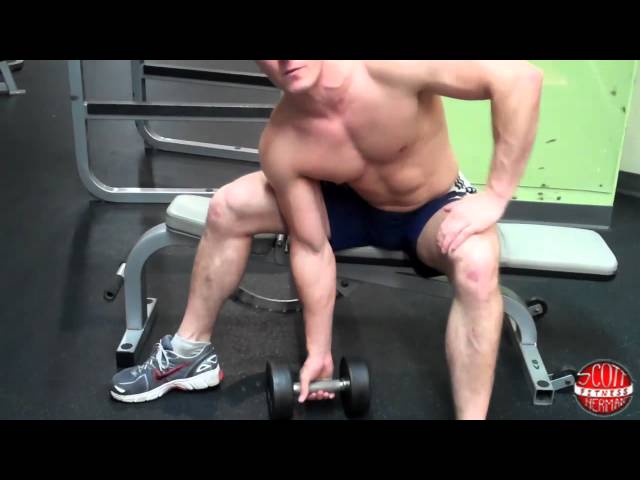
Concentration curls isolate your biceps by anchoring your elbow against your inner thigh while seated. This braced position eliminates momentum and shoulder involvement, forcing your biceps to handle the entire load. The exercise is named for the intense mental focus it demands on each rep.
When to use it
Use as a finishing exercise after heavier bicep work like barbell curls or chin-ups. The strict isolation makes concentration curls ideal for high-rep pump work at the end of arm sessions. Avoid using as your primary bicep builder since the load is self-limiting.
Who it's for
Lifters wanting to develop peak bicep contraction and mind-muscle connection. Those with elbow sensitivity who need a controlled curl without wrist rotation. Bodybuilders focusing on bicep peak development and separation.
Coaching Note
Brace your elbow firmly against your inner thigh—this is your anchor point that must not move. The only movement should occur at your elbow joint. If you find your shoulder or upper arm moving, reduce the weight immediately.
Muscles worked: Concentration Curl
Also targets: Brachialis, Forearms
Want Ely to consider Concentration Curl for your plan?
Share your training details. Ely reviews the full week before anything is delivered.
Concentration Curl form guide
- 1
Sit on a bench with legs spread wide.
- 2
Hold a dumbbell with one hand, elbow braced against inner thigh.
- 3
Start with arm fully extended toward the floor.
- 4
Curl the weight up toward your shoulder.
- 5
Squeeze the bicep at the top.
- 6
Lower slowly and repeat, then switch arms.
What are the best tips for the Concentration Curl?
Brace your elbow firmly against your thigh.
Focus on peak contraction at the top.
Keep your upper body still throughout.
When to Use the Concentration Curl
Use concentration curls as a finishing exercise after heavier bilateral curls. The strict isolation makes them ideal for high-rep pump work (12-15+ reps) at the end of arm sessions. They also work well for mind-muscle connection practice.
What are common Concentration Curl mistakes to avoid?
Moving the elbow off the thigh - reduces isolation.
Letting your elbows drift away from the intended path during the Concentration Curl can change which muscles carry the load. Use the elbow position described in the setup cues and keep it consistent through each rep.
Rushing through reps - limits mind-muscle connection.
Rushing through the Concentration Curl makes it easier to lose position and harder to keep tension on your Biceps brachii. Slow down enough to control both the lifting and lowering portions of each rep.
Leaning back to lift weight - uses body momentum.
Bouncing or using momentum during the Concentration Curl makes the movement harder to control and can shift work away from your Biceps brachii. Use a load you can move smoothly through the intended range.
Is the Concentration Curl right for you?
Lifters wanting to develop peak bicep contraction and mind-muscle connection. Those with elbow sensitivity who need a controlled curl without wrist rotation. Bodybuilders focusing on bicep peak development and separation.
Programming examples for Concentration Curl
The sets, reps, and rest times below are examples. Adjust them for your current ability, the exercise, and your total training. These ranges are not exclusive to one goal.
Example: 3 sets of 12-15 reps per arm. Rest 45 seconds.
Muscle Growth
10-15 reps
Example rest: 90s-2min; extend as needed
Strength
4-6 reps
Example rest: 2-3min; extend as needed
Endurance
15-20 reps
Example rest: 60s; extend as needed
Where to Use in Your Workout
Position at the end of arm workouts as a finishing isolation exercise. Concentration curls work best after heavier compound pulling and barbell curls when biceps are pre-fatigued. The strict form makes them ideal for pump-focused sets.
Sample Workout Blocks
Week 1: 3x12 each arm @ RPE 7 | Week 2: 3x12 @ RPE 8 | Week 3: 3x10 @ RPE 8 | Week 4 (deload): 2x15 @ RPE 6
Want help choosing exercises, sets, and reps for your schedule? Ely reviews purchased plans before delivery.
Get Your Custom PlanWhere Concentration Curl fits in your workout
This is one example of how Concentration Curl could sit inside a complete workout. Your plan may use different movements after Ely checks your assessment.
Sample workout
- Pull-Up or Lat Pulldown4 × 8
- Row Variation3 × 10
- Concentration Curl3 × 12
- Hammer Curl3 × 12
Use this exercise in Gym Mode
MySetPlan guides you set by set, times your rest, records your work, and tells you what to do next from the plan Ely approved.
Start My $19 WeekWhat are good alternatives to the Concentration Curl?
Preacher Curl
BicepsEZ BarIntermediate
Spider Curl
BicepsDumbbellIntermediate
Cable Curl
BicepsCableBeginner
Other Variations
- Standing Concentration Curl
- Cable Concentration Curl
Variation Details
Seated Concentration Curl
Sit on a bench and anchor your elbow against your inner thigh. This is the most stable version and allows maximum control. Best for high-rep pump work.
Cable Concentration Curl
Use a low cable with a handle instead of a dumbbell. Cables provide constant tension throughout the movement, including at the top where dumbbells lose tension.
Barbell Curl
Curl a barbell with both arms together. Allows more total weight and less control. Better for building overall bicep strength.
Dumbbell Curl
Curl dumbbells with both arms simultaneously. Allows independent arm movement and is less strict than concentration curls but more controlled than barbell curls.
Concentration Curl vs Other Exercises
vs Barbell Curl
Barbell curls allow more weight and less control, building raw bicep strength. Concentration curls demand more control and focus and are better for muscle pump and peak development. Use barbells for strength; use concentration curls for finishing work.
Dumbbell curls require more core stability and allow independent arm movement. Concentration curls provide more control and a stronger peak contraction. Both are effective isolation movements.
Want a plan you do not have to piece together?
Share your goal, schedule, equipment, and experience. Ely checks the complete exercise selection before he approves your week.
Start My $19 Starter Week$19 once · No automatic renewal · Delivered in 1–3 business days
Related Content
Safety Notes
- Use controlled movements.
- Dont use excessive weight.
- General fitness education only. This is not medical advice or a rehabilitation protocol. Stop if you feel pain, and follow a licensed healthcare professional for an injury, medical condition, or return after surgery.