General exercise guide
Barbell Curl
Save
Primary
Biceps
Secondary
Forearms, Brachialis
Equipment
Barbell
Difficulty
Beginner
Type
Pull
See how Barbell Curl could fit a workout
The example below shows one possible placement. Your purchased plan is built from your assessment, and Ely checks every exercise before approving it.
One-time purchase · Checked by Ely · Delivered in 1–3 business days
This page is not medical advice or a rehabilitation protocol. Ely's personal review applies to purchased workout plans and does not replace an in-person assessment by a licensed healthcare professional.
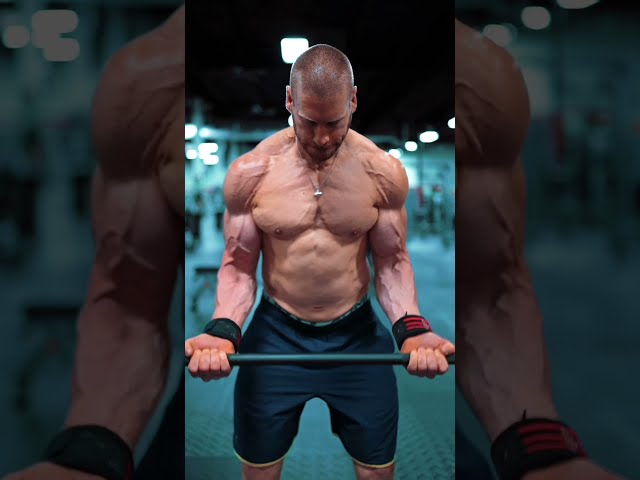
The barbell curl is the foundational mass-builder for biceps, allowing you to load heavier than any dumbbell variation. The fixed grip forces both arms to work equally, making it ideal for progressive overload. Unlike EZ-bar curls which angle your wrists, the straight bar keeps your forearms fully supinated for maximum biceps brachii recruitment.
Coaching Note
Lock your elbows against your sides as if they are welded in place. The only movement should be at the elbow joint. If you find yourself swinging or leaning back, reduce the weight immediately—momentum is the enemy of bicep growth.
Muscles worked: Barbell Curl
Why This Exercise Works
The barbell curl primarily targets the biceps brachii through elbow flexion. The supinated grip (palms up) maximizes bicep involvement over the brachialis. The fixed bar prevents wrist rotation, forcing both arms to work equally and allowing heavier loading than dumbbells.
Also targets: Forearms, Brachialis
Want Ely to consider Barbell Curl for your plan?
Share your training details. Ely reviews the full week before anything is delivered.
Barbell Curl form guide
- 1
Stand with feet shoulder-width apart holding a barbell with underhand grip.
- 2
Keep elbows close to your sides and shoulders back.
- 3
Curl the weight up by flexing at the elbows.
- 4
Squeeze biceps at the top of the movement.
- 5
Lower the weight under control to starting position.
- 6
Repeat for desired reps without swinging.
What are the best tips for the Barbell Curl?
Keep your elbows stationary throughout the movement.
Avoid using momentum or swinging the weight.
Focus on squeezing the biceps at peak contraction.
When to Use the Barbell Curl
Program barbell curls as your first bicep movement when training arms directly, or after compound pulling exercises like rows and pull-ups. The bilateral loading makes this exercise ideal for heavy sets of 6-10 reps. Follow with unilateral or isolation work to finish the biceps.
What are common Barbell Curl mistakes to avoid?
Swinging the body to lift heavier weight - reduces bicep activation.
Moving elbows forward during the curl - shifts tension away from biceps.
Not fully extending arms at bottom - limits range of motion.
Is the Barbell Curl right for you?
All levels seeking foundational bicep mass. Those who want progressive overload potential that dumbbells cannot match at heavier weights.
Programming examples for Barbell Curl
The sets, reps, and rest times below are examples. Adjust them for your current ability, the exercise, and your total training. These ranges are not exclusive to one goal.
Example: 3-4 sets of 8-12 reps. Rest 60-90 seconds.
Muscle Growth
8-12 reps
Example rest: 90s-2min; extend as needed
Strength
4-6 reps
Example rest: 2-3min; extend as needed
Endurance
15-20 reps
Example rest: 60s; extend as needed
Where to Use in Your Workout
Position as your first bicep exercise when strength is highest. Follow with isolation variations that target different portions of the curl strength curve.
Sample Workout Blocks
Week 1: 3x10 @ RPE 7 | Week 2: 3x8 @ RPE 8 | Week 3: 4x8 @ RPE 8 | Week 4 (deload): 2x10 @ RPE 6
Want help choosing exercises, sets, and reps for your schedule? Ely reviews purchased plans before delivery.
Get Your Custom PlanWhere Barbell Curl fits in your workout
This is one example of how Barbell Curl could sit inside a complete workout. Your plan may use different movements after Ely checks your assessment.
Sample workout
- Pull-Up or Lat Pulldown4 × 8
- Row Variation3 × 10
- Barbell Curl3 × 12
- Hammer Curl3 × 12
Use this exercise in Gym Mode
MySetPlan guides you set by set, times your rest, records your work, and tells you what to do next from the plan Ely approved.
Start My $19 WeekWhat are good alternatives to the Barbell Curl?
Other Variations
- EZ Bar Curl
- Wide Grip Barbell Curl
- Close Grip Barbell Curl
Variation Details
Dumbbell Curl
Each arm works independently. Allows supination through the range of motion (rotating from neutral to palm-up). Fixes strength imbalances between arms.
EZ Bar Curl
Angled grip reduces wrist strain. Slightly less biceps brachii activation but more comfortable for longer sets. Best choice if straight bar hurts your wrists.
Preacher Curl
Pad eliminates all momentum and isolates the biceps through a stretched position. Excellent for targeting the short head. Use for strict form work after barbell curls.
Hammer Curl
Neutral grip (thumbs up) targets the brachialis and brachioradialis alongside the biceps. Builds arm thickness and forearm size. Use as a complement to supinated curls, not a replacement.
Barbell Curl vs Other Exercises
Barbell curls let you go heavier with both arms working together — better for progressive overload. Dumbbell curls allow supination through the range and fix imbalances. Use barbell curls as your primary heavy movement, dumbbell curls for unilateral work and variety.
Want a plan you do not have to piece together?
Share your goal, schedule, equipment, and experience. Ely checks the complete exercise selection before he approves your week.
Start My $19 Starter Week$19 once · No automatic renewal · Delivered in 1–3 business days
Related Content
Safety Notes
- Avoid excessive weight that causes swinging.
- Keep wrists neutral to prevent strain.
- General fitness education only. This is not medical advice or a rehabilitation protocol. Stop if you feel pain, and follow a licensed healthcare professional for an injury, medical condition, or return after surgery.