General exercise guide
Band Curl
Save
Primary
Biceps
Secondary
Forearms, Brachialis
Equipment
Resistance Band
Difficulty
Beginner
Type
Pull
See how Band Curl could fit a workout
The example below shows one possible placement. Your purchased plan is built from your assessment, and Ely checks every exercise before approving it.
One-time purchase · Checked by Ely · Delivered in 1–3 business days
This page is not medical advice or a rehabilitation protocol. Ely's personal review applies to purchased workout plans and does not replace an in-person assessment by a licensed healthcare professional.
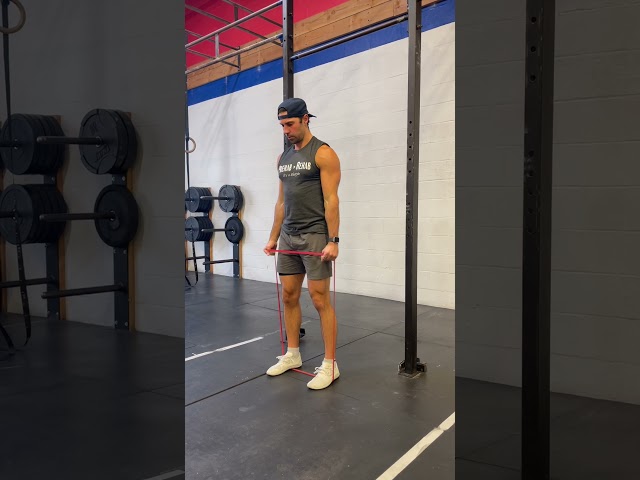
Band curls provide a unique resistance curve where tension increases as you curl upward. This accommodating resistance means the top of the movement is hardest—exactly where you are strongest. Bands are portable, affordable, and perfect for home training, travel workouts, or high-rep finishers.
When to use it
Use for home training, warm-ups, or high-rep work.
Who it's for
All levels. Ideal for home or travel training.
Coaching Note
Stand on the center of the band with both feet to secure it. Do not let the band snap your arms back down—control the eccentric by resisting the pull. The band wants to accelerate the descent, so fight it deliberately.
What muscles does the Band Curl work?
Also targets: Forearms, Brachialis
Want Ely to consider Band Curl for your plan?
Share your training details. Ely reviews the full week before anything is delivered.
Step-by-step: Band Curl
- 1
Stand on center of resistance band.
- 2
Hold handles with underhand grip.
- 3
Keep elbows at your sides.
- 4
Curl handles up toward shoulders.
- 5
Squeeze biceps at the top.
- 6
Lower against band resistance with control.
What are the best tips for the Band Curl?
Band resistance increases as you curl up.
Great for home workouts or warm-ups.
Control the eccentric against band pull.
When to Use the Band Curl
Use band curls for home workouts, travel training, warm-ups before heavier curl work, or high-rep metabolic finishers. The ascending resistance makes them particularly effective for pump-focused sets at the end of arm workouts.
Mistakes to watch for on the Band Curl
Letting band snap back - loses eccentric work.
Changing your back position during the Band Curl can alter the movement and make the load harder to control. Brace your midsection and keep the torso position called for by the exercise.
Not standing on band securely - slips.
On an upper-body pulling movement like the Band Curl, this mistake can shift work away from your Biceps brachii. Keep your torso stable and guide the load through the intended pulling path.
Using too light band - insufficient resistance.
Your foot position during the Band Curl determines how force transfers through your body. Keep your feet flat with weight distributed evenly — losing contact with the ground means you're losing power and stability.
Who should do the Band Curl?
All levels. Ideal for home or travel training.
How to Program the Band Curl
Strength8-10 reps
Lower reps with heavier weight builds raw strength. Your muscles and nervous system adapt to handle more load over time. This range is best for strength-focused goals.
Muscle Growth12-20 reps
This rep range keeps your muscles under tension long enough to trigger growth. Most people see the best muscle-building results in this zone. It balances strength and muscle size.
Endurance20-30 reps
Higher reps with lighter weight builds muscular endurance and improves conditioning. This range is good for joint health and building work capacity.
General guideline: 3-4 sets of 15-20 reps. Rest 30-45 seconds.
Where Band Curl fits in your workout
This is one example of how Band Curl could sit inside a complete workout. Your plan may use different movements after Ely checks your assessment.
Sample workout
- Pull-Up or Lat Pulldown4 × 8
- Row Variation3 × 10
- Band Curl3 × 12
- Hammer Curl3 × 12
Use this exercise in Gym Mode
MySetPlan guides you set by set, times your rest, records your work, and tells you what to do next from the plan Ely approved.
Start My $19 WeekWhat are good alternatives to the Band Curl?
Dumbbell Curl
BicepsDumbbellBeginner
Cable Curl
BicepsCableBeginner
Resistance Band Curl
BicepsResistance BandBeginner
Other Variations
- Band Hammer Curl
- Seated Band Curl
- Band Preacher Curl
Want a plan you do not have to piece together?
Share your goal, schedule, equipment, and experience. Ely checks the complete exercise selection before he approves your week.
Start My $19 Starter Week$19 once · No automatic renewal · Delivered in 1–3 business days
Related Content
Safety Notes
- Check band for damage.
- Secure band under feet.