General exercise guide
Seated Leg Curl
Save
Primary
Hamstrings
Secondary
Calves
Equipment
Machine
Difficulty
Beginner
Type
Pull
See how Seated Leg Curl could fit a workout
The example below shows one possible placement. Your purchased plan is built from your assessment, and Ely checks every exercise before approving it.
One-time purchase · Checked by Ely · Delivered in 1–3 business days
This page is not medical advice or a rehabilitation protocol. Ely's personal review applies to purchased workout plans and does not replace an in-person assessment by a licensed healthcare professional.
The seated leg curl trains your hamstrings in a stretched position—your hips are flexed while seated, pre-stretching the hamstrings before the knee flexion even begins. Research suggests that training muscles in their lengthened position enhances muscle growth, making seated curls potentially superior for hypertrophy compared to lying variations. The stretched starting position creates intense hamstring tension.
Coaching Note
Stay seated upright throughout—do not lean forward or backward. The machine should feel challenging in the stretched starting position, not just at peak contraction. If you only feel it at the top, you may need to adjust the seat position.
What muscles does the Seated Leg Curl work?
Why This Exercise Works
The seated leg curl is an isolation exercise that targets your hamstrings as the sole primary mover. What makes the seated variation unique is the position of your hips — when seated, your hamstrings are placed in a stretched position before you even begin the movement. This stretched starting position increases tension on the muscle and may enhance muscle growth.
Your hamstrings consist of three muscles: the biceps femoris (long and short heads), semitendinosus, and semimembranosus. All three work together to flex (bend) your knee against resistance. The seated leg curl targets these muscles through their primary function — knee flexion. Unlike compound movements like deadlifts, which work hamstrings through hip extension, the leg curl isolates pure knee flexion.
The stretched position in the seated leg curl deserves special attention. Research suggests that training muscles in their lengthened position may produce superior hypertrophy gains. When you sit with your legs extended, your hamstrings are stretched across both the hip and knee joints. This stretched starting position increases mechanical tension — one of the primary drivers of muscle growth.
Your gastrocnemius (calf muscle) assists slightly because it also crosses the knee joint. However, the hamstrings do the vast majority of the work. The machine's fixed path eliminates the need for stabilization, allowing you to focus entirely on contracting your hamstrings.
The seated leg curl is particularly effective for building the lower portion of your hamstrings near the knee. This area is often underdeveloped compared to the upper hamstrings, which receive more work from hip extension exercises. Including seated leg curls ensures complete hamstring development from top to bottom.
For maximum hamstring growth, combine seated leg curls (stretched position) with lying leg curls (shortened position) and Romanian deadlifts (hip extension). This three-movement approach targets all hamstring functions and positions.
Browse all hamstrings exercises
Also targets: Calves
Want Ely to consider Seated Leg Curl for your plan?
Share your training details. Ely reviews the full week before anything is delivered.
Step-by-step: Seated Leg Curl
- 1
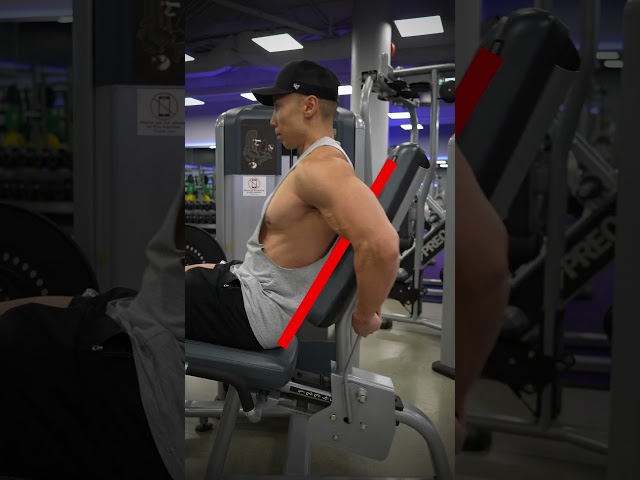
Sit in machine with back against pad.
- 2
Position pad on lower calves/Achilles.
- 3
Curl legs down and back under seat.
- 4
Squeeze hamstrings at bottom.
- 5
Control legs back to starting position.
- 6
Repeat for desired reps.
What are the best tips for the Seated Leg Curl?
Targets hamstrings in stretched position.
Good for developing mind-muscle connection.
Adjust seat height for comfort.
When to Use the Seated Leg Curl
Program seated leg curls after hip hinge movements to complete hamstring training with stretch-focused knee flexion work. Alternate between seated and lying curls across training blocks, or include both for maximum stimulus. Use them 2-3 times per week when hamstring growth is a priority.
What are common Seated Leg Curl mistakes to avoid?
Leaning forward during curl.
Not full range of motion.
Going too heavy and compromising proper form.
Who should do the Seated Leg Curl?
Lifters wanting complete hamstring development from multiple angles. Anyone who only does lying curls and wants variety. Trainees seeking the hypertrophy benefits of stretch-mediated muscle growth.
Programming examples for Seated Leg Curl
The sets, reps, and rest times below are examples. Adjust them for your current ability, the exercise, and your total training. These ranges are not exclusive to one goal.
Example: 3-4 sets of 10-12 reps. Rest 60 seconds.
Muscle Growth
10-15 reps
Example rest: 90s-2min; extend as needed
Strength
6-8 reps
Example rest: 2-3min; extend as needed
Endurance
15-20 reps
Example rest: 60s; extend as needed
Where to Use in Your Workout
Position after hip hinge movements (RDLs, good mornings) as hamstring isolation work. The stretched starting position complements lying curls which work hamstrings in a shortened position. Both variations together provide complete knee flexion stimulus.
Sample Workout Blocks
Week 1: 3x12 @ RPE 7 | Week 2: 3x12 @ RPE 8 | Week 3: 4x10 @ RPE 8 | Week 4 (deload): 2x15 @ RPE 6
Want help choosing exercises, sets, and reps for your schedule? Ely reviews purchased plans before delivery.
Get Your Custom PlanWhere Seated Leg Curl fits in your workout
This is one example of how Seated Leg Curl could sit inside a complete workout. Your plan may use different movements after Ely checks your assessment.
Sample workout
- Squat or Leg Press4 × 8
- Romanian Deadlift3 × 10
- Seated Leg Curl3 × 12
- Calf Raise3 × 15
Use this exercise in Gym Mode
MySetPlan guides you set by set, times your rest, records your work, and tells you what to do next from the plan Ely approved.
Start My $19 WeekWhat are good alternatives to the Seated Leg Curl?
Lying Leg Curl
HamstringsMachineBeginner
Standing Leg Curl
HamstringsMachineBeginner
Nordic Curl
HamstringsBodyweightAdvanced
Cable Leg Curl
HamstringsCableBeginner
Other Variations
- Single Leg Seated Curl
- Tempo Seated Curl
Variation Details
Lying Leg Curl
Perform leg curls face-down on a lying leg curl machine. This variation targets hamstrings in a shortened position with less stretch. Use both seated and lying variations for complete development.
Standing Leg Curl
Curl one leg at a time while standing at a machine. This single-leg variation helps correct imbalances and requires more stability than seated curls.
Cable Leg Curl
Attach an ankle cuff to a low cable and curl your leg. Allows for constant tension and single-leg work without a dedicated leg curl machine.
Seated Leg Curl vs Other Exercises
Seated curls work hamstrings in a stretched position; lying curls work them in a shortened position. Both are valuable. Seated curls may be slightly better for hypertrophy due to the stretch, but using both is optimal.
Romanian deadlifts work hamstrings through hip extension with heavy compound loading. Seated leg curls isolate knee flexion with lighter weight. RDLs build overall hamstring strength; leg curls add isolation volume for growth.
Seated curls put your hamstrings in a deep stretch at the top, which is great for growth but trains both legs together. The standing leg curl trades that stretch for unilateral work — each leg reps out on its own. Run seated for stretch-focused hypertrophy, standing when you are correcting an imbalance or training around a seated machine that is occupied.
Want a plan you do not have to piece together?
Share your goal, schedule, equipment, and experience. Ely checks the complete exercise selection before he approves your week.
Start My $19 Starter Week$19 once · No automatic renewal · Delivered in 1–3 business days
Related Content
Safety Notes
- Adjust machine to fit.
- Control the weight.
- General fitness education only. This is not medical advice or a rehabilitation protocol. Stop if you feel pain, and follow a licensed healthcare professional for an injury, medical condition, or return after surgery.