General exercise guide
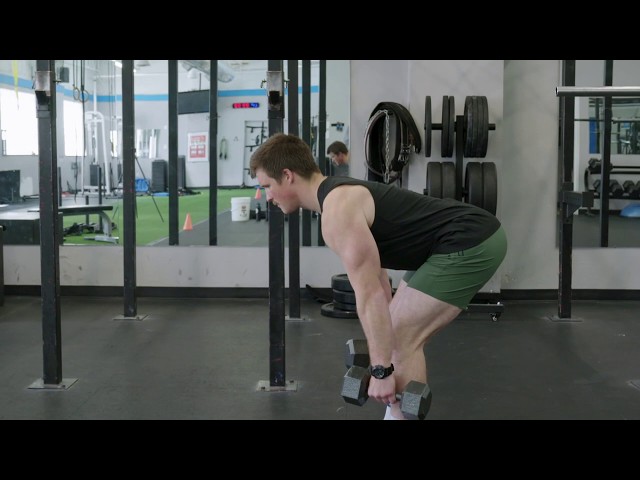
Dumbbell RDL
Save
Primary
Hamstrings
Secondary
Glutes, Lower Back, Core
Equipment
Dumbbell
Difficulty
Intermediate
Type
Hinge
See how Dumbbell RDL could fit a workout
The example below shows one possible placement. Your purchased plan is built from your assessment, and Ely checks every exercise before approving it.
One-time purchase · Checked by Ely · Delivered in 1–3 business days
This page is not medical advice or a rehabilitation protocol. Ely's personal review applies to purchased workout plans and does not replace an in-person assessment by a licensed healthcare professional.
The dumbbell RDL brings the Romanian deadlift pattern to lifters without barbell access, using two dumbbells at your sides instead. The independent weights allow a more natural arm path and may reduce lower back stress for some lifters compared to the fixed barbell position. This makes dumbbell RDLs excellent for home gyms and as a variation from barbell work.
When to use it
Use as your primary hip hinge movement when barbells are unavailable, or as a secondary hinge after barbell deadlifts. The dumbbell version allows a more natural arm path and may feel easier on the lower back for some lifters.
Who it's for
Home gym trainees without barbell access. Lifters who find barbell RDLs uncomfortable on the lower back. Anyone wanting to address hamstring strength imbalances since each arm works independently.
Coaching Note
Keep the dumbbells close to your legs—they should nearly brush your thighs and shins during the movement. Push your hips back while maintaining a flat back. The dumbbells hanging at your sides rather than in front may feel different from barbells, so adjust your balance.
What muscles does the Dumbbell RDL work?
Want Ely to consider Dumbbell RDL for your plan?
Share your training details. Ely reviews the full week before anything is delivered.
Step-by-step: Dumbbell RDL
- 1
Stand holding dumbbells in front of thighs.
- 2
Push hips back maintaining slight knee bend.
- 3
Lower dumbbells along legs to mid-shin.
- 4
Feel stretch in hamstrings.
- 5
Drive hips forward to return to standing.
- 6
Squeeze glutes at top.
What are the best tips for the Dumbbell RDL?
Dumbbells allow more natural arm path.
Great alternative if barbell unavailable.
Keep dumbbells close to legs.
When to Use the Dumbbell RDL
Program dumbbell RDLs as your primary hip hinge when barbells are unavailable, as a variation from barbell RDLs, or when you want the independent loading that dumbbells provide. Use them for 3-4 sets of 8-12 reps. They pair well with any leg curl variation.
Mistakes to watch for on the Dumbbell RDL
Rounding back which increases risk of spinal injury.
Changing your back position during the Dumbbell RDL can alter the movement and make the load harder to control. Brace your midsection and keep the torso position called for by the exercise.
Letting dumbbells drift forward.
Hip hinge movements like the Dumbbell RDL depend on a consistent hip path. Keep the load controlled, maintain your brace, and let your Hamstrings guide the movement.
Too much knee bend for optimal results.
Letting your knees drift away from the intended line during the Dumbbell RDL changes how force moves through the exercise. Keep each knee tracking in line with the foot as you move.
Who should do the Dumbbell RDL?
Home gym trainees without barbell access. Lifters who find barbell RDLs uncomfortable on the lower back. Anyone wanting to address hamstring strength imbalances since each arm works independently.
Programming examples for Dumbbell RDL
The sets, reps, and rest times below are examples. Adjust them for your current ability, the exercise, and your total training. These ranges are not exclusive to one goal.
Example: 3-4 sets of 10-12 reps. Rest 90 seconds.
Muscle Growth
8-12 reps
Example rest: 90s-2min; extend as needed
Strength
4-6 reps
Example rest: 2-3min; extend as needed
Endurance
12-15 reps
Example rest: 60s; extend as needed
Where to Use in Your Workout
Use as your primary hinge movement without barbells, or after conventional deadlifts for hamstring-focused volume. Pairs well with leg curls for complete hamstring development.
Sample Workout Blocks
Week 1: 3x12 @ RPE 7 | Week 2: 3x10 @ RPE 8 | Week 3: 4x8 @ RPE 8 | Week 4 (deload): 2x12 @ RPE 6
Want help choosing exercises, sets, and reps for your schedule? Ely reviews purchased plans before delivery.
Get Your Custom PlanWhere Dumbbell RDL fits in your workout
This is one example of how Dumbbell RDL could sit inside a complete workout. Your plan may use different movements after Ely checks your assessment.
Sample workout
- Squat or Leg Press4 × 8
- Romanian Deadlift3 × 10
- Dumbbell RDL3 × 12
- Calf Raise3 × 15
Use this exercise in Gym Mode
MySetPlan guides you set by set, times your rest, records your work, and tells you what to do next from the plan Ely approved.
Start My $19 WeekWhat are good alternatives to the Dumbbell RDL?
Romanian Deadlift
HamstringsBarbellIntermediate
Single Leg RDL
HamstringsDumbbellIntermediate
Kettlebell RDL
HamstringsKettlebellBeginner
Other Variations
- Single Dumbbell RDL
- Deficit Dumbbell RDL
Variation Details
Single-Leg Dumbbell RDL
Perform the hip hinge on one leg while the other extends behind you for balance. This dramatically increases balance demands and core engagement while isolating each leg independently. Excellent for addressing strength imbalances and improving proprioception.
Staggered Stance RDL
Position one foot slightly behind the other with most of your weight on the front leg. This provides a middle ground between bilateral and single-leg variations — more stability than single-leg but still emphasizes one side. Good progression toward full single-leg work.
Deficit Dumbbell RDL
Stand on a weight plate or small platform to increase range of motion. This creates a greater hamstring stretch at the bottom if your flexibility allows it. Only use if you can maintain a flat back through the extended range. Excellent for improving flexibility and muscle lengthening.
Tempo RDL
Use a controlled tempo such as 4 seconds down, 2 seconds up. This increases time under tension significantly, especially in the stretched position. Tempo work is excellent for hypertrophy and improving the mind-muscle connection with the hamstrings.
B-Stance Dumbbell RDL
Position one foot flat and the other slightly back with only the toes touching the ground. The back leg provides balance assistance while the front leg does most of the work. Similar benefits to staggered stance — a progression toward single-leg variations.
Dumbbell RDL vs Other Exercises
Barbell Romanian deadlifts allow heavier loading for greater strength development due to the bilateral grip and fixed bar position. Dumbbell RDLs offer a more natural arm path, may reduce lower back stress, and require more stabilizer engagement. For maximum strength, use barbells. For hypertrophy, variety, or when training at home, dumbbells work excellently. Many lifters include both variations.
Single-leg RDLs dramatically increase balance and coordination demands while isolating each leg independently. Bilateral dumbbell RDLs allow more weight and less coordination focus. Use single-leg variations to address imbalances, improve proprioception, and challenge stability. Use bilateral variations when prioritizing loading and hamstring strength development.
Want a plan you do not have to piece together?
Share your goal, schedule, equipment, and experience. Ely checks the complete exercise selection before he approves your week.
Start My $19 Starter Week$19 once · No automatic renewal · Delivered in 1–3 business days
Related Content
Safety Notes
- Keep back flat.
- Control the movement.
- General fitness education only. This is not medical advice or a rehabilitation protocol. Stop if you feel pain, and follow a licensed healthcare professional for an injury, medical condition, or return after surgery.