General exercise guide
Barbell Wrist Curl
Save
Primary
Forearms
Secondary
Finger flexors
Equipment
Barbell
Difficulty
Beginner
Type
Pull
See how Barbell Wrist Curl could fit a workout
The example below shows one possible placement. Your purchased plan is built from your assessment, and Ely checks every exercise before approving it.
One-time purchase · Checked by Ely · Delivered in 1–3 business days
This page is not medical advice or a rehabilitation protocol. Ely's personal review applies to purchased workout plans and does not replace an in-person assessment by a licensed healthcare professional.
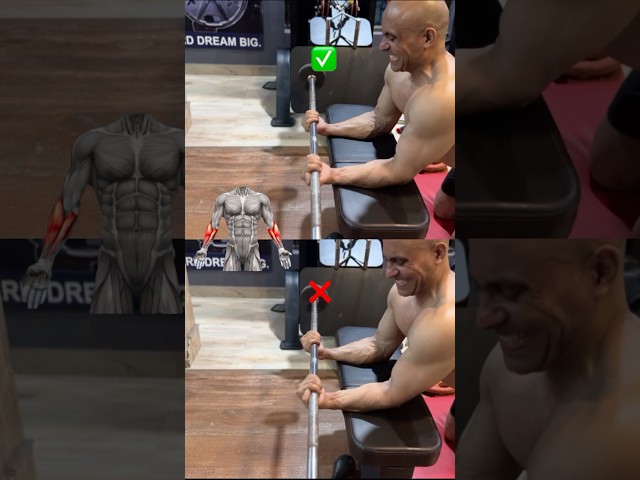
Barbell wrist curls are the foundational forearm flexor exercise, directly targeting the muscles that control your grip. The seated position with forearms braced on your thighs isolates the wrist flexors completely. Letting the bar roll to your fingertips increases the stretch and brings finger flexors into the movement.
Coaching Note
Sit on a bench with forearms resting on your thighs and wrists hanging over your knees. Let the bar roll down to your fingertips for maximum stretch, then curl it back up by flexing your wrists and closing your fingers. Use a slow, controlled tempo—forearms respond well to time under tension.
What muscles does the Barbell Wrist Curl work?
Why This Exercise Works
Wrist curls directly target the forearm flexors—the muscles on the palm side of your forearm that control grip. Allowing the bar to roll to your fingertips creates a fuller stretch and brings the finger flexors into the movement. The seated position with forearms supported isolates the wrist flexors without momentum. High rep work suits these muscles since they are endurance-oriented from daily gripping tasks.
Also targets: Finger flexors
Want Ely to consider Barbell Wrist Curl for your plan?
Share your training details. Ely reviews the full week before anything is delivered.
Step-by-step: Barbell Wrist Curl
- 1
Sit on a bench and hold a barbell with an underhand grip, hands shoulder-width apart.
- 2
Rest your forearms on your thighs with your wrists hanging just past your knees.
- 3
Allow the barbell to roll down toward your fingertips, extending your wrists fully.
- 4
Curl the barbell up by flexing your wrists as high as possible.
- 5
Squeeze at the top of the movement for a brief pause.
- 6
Lower the weight slowly back to the starting position with control.
What are the best tips for the Barbell Wrist Curl?
Use a light to moderate weight to maintain strict form and full range of motion.
Keep your forearms firmly pressed against your thighs throughout the movement.
Focus on a slow, controlled tempo to maximize time under tension.
Allow the bar to roll to your fingertips for a greater stretch.
When to Use the Barbell Wrist Curl
Program wrist curls at the end of pull or arm workouts when grip fatigue will not affect compound lifts. They pair well with reverse wrist curls for balanced forearm development. Train 2-3 times per week with high reps (12-20) for best results.
What are common Barbell Wrist Curl mistakes to avoid?
Using momentum or swinging the weight instead of controlled wrist flexion.
Lifting the forearms off the thighs during the curl.
Going too heavy and compromising range of motion.
Who should do the Barbell Wrist Curl?
Lifters wanting direct forearm hypertrophy work. Athletes in grip-dependent sports like climbing, wrestling, or martial arts. Anyone with grip as a limiting factor in pulls.
Programming examples for Barbell Wrist Curl
The sets, reps, and rest times below are examples. Adjust them for your current ability, the exercise, and your total training. These ranges are not exclusive to one goal.
Example: 3-4 sets of 12-15 reps for forearm growth. Rest 60-90 seconds between sets.
Muscle Growth
12-15 reps
Example rest: 90s-2min; extend as needed
Strength
6-8 reps
Example rest: 2-3min; extend as needed
Endurance
20-25 reps
Example rest: 60s; extend as needed
Where to Use in Your Workout
Position at the very end of your pulling workout when grip fatigue will not affect other exercises. Forearm work tolerates high frequency—you can train them 2-3 times per week.
Sample Workout Blocks
Week 1: 3x15 @ RPE 7 | Week 2: 3x18 @ RPE 7 | Week 3: 4x15 @ RPE 8 | Week 4 (deload): 2x20 @ RPE 6
Want help choosing exercises, sets, and reps for your schedule? Ely reviews purchased plans before delivery.
Get Your Custom PlanWhere Barbell Wrist Curl fits in your workout
This is one example of how Barbell Wrist Curl could sit inside a complete workout. Your plan may use different movements after Ely checks your assessment.
Sample workout
- Main Movement4 × 8
- Secondary Movement3 × 10
- Barbell Wrist Curl3 × 12
- Accessory Movement3 × 15
Use this exercise in Gym Mode
MySetPlan guides you set by set, times your rest, records your work, and tells you what to do next from the plan Ely approved.
Start My $19 WeekWhat are good alternatives to the Barbell Wrist Curl?
Dumbbell Wrist Curl
ForearmsDumbbellBeginner
Cable Wrist Curl
ForearmsCableBeginner
Behind-the-Back Barbell Wrist Curl
ForearmsBarbellIntermediate
Other Variations
- Dumbbell wrist curl
- Single-arm wrist curl
- Behind-the-back barbell wrist curl
- Cable wrist curl
Want a plan you do not have to piece together?
Share your goal, schedule, equipment, and experience. Ely checks the complete exercise selection before he approves your week.
Start My $19 Starter Week$19 once · No automatic renewal · Delivered in 1–3 business days
Related Content
Safety Notes
- Start with a light weight to avoid wrist strain.
- Avoid hyperextending the wrist at the bottom of the movement.
- Stop if you feel sharp pain in the wrist joint.