General exercise guide
Barbell Complex
Save
Primary
Full Body
Secondary
Shoulders, Quadriceps, Glutes
Equipment
Barbell
Difficulty
Intermediate
Type
Push
See how Barbell Complex could fit a workout
The example below shows one possible placement. Your purchased plan is built from your assessment, and Ely checks every exercise before approving it.
One-time purchase · Checked by Ely · Delivered in 1–3 business days
This page is not medical advice or a rehabilitation protocol. Ely's personal review applies to purchased workout plans and does not replace an in-person assessment by a licensed healthcare professional.
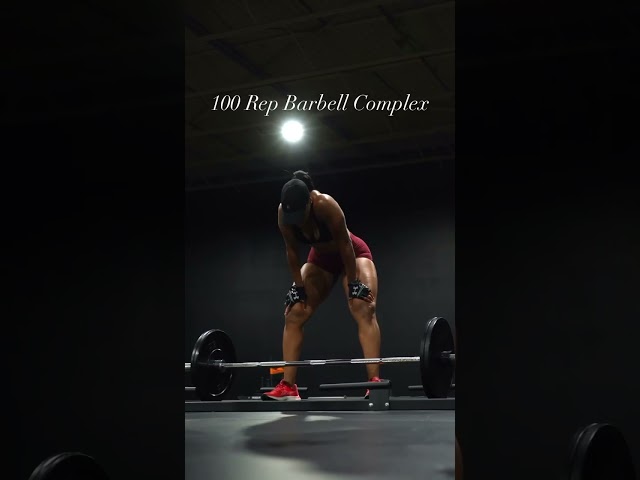
Barbell complexes combine multiple barbell movements performed consecutively without releasing the bar. This training style builds strength-endurance, metabolic conditioning, and mental toughness while requiring minimal equipment and space.
When to use it
Use for metabolic conditioning and strength endurance training.
Who it's for
Intermediate athletes wanting efficient conditioning work.
Coaching Note
Select a weight appropriate for your weakest lift in the sequence. Maintain your grip on the bar throughout the entire complex—setting it down means the complex is over. Focus on breathing between movements and keeping transitions smooth.
Barbell Complex — targeted muscles
Browse all full body exercises
Also targets: Shoulders, Quadriceps, Glutes
Want Ely to consider Barbell Complex for your plan?
Share your training details. Ely reviews the full week before anything is delivered.
How do you perform the Barbell Complex?
- 1
Start with barbell on the floor in deadlift stance.
- 2
Perform a deadlift followed by a bent-over row.
- 3
Stand up and perform a hang clean to front rack.
- 4
Complete with a front squat to push press overhead.
What are the best tips for the Barbell Complex?
Use a weight appropriate for your weakest lift.
Maintain grip on bar throughout entire complex.
Focus on breathing between each component lift.
Keep transitions smooth and controlled.
When to Use the Barbell Complex
Use as conditioning finishers, standalone metabolic work, or time-efficient full-body training. Popular complexes include the Javorek (upright row → snatch pull → squat push press → good morning) and Cosgrove (deadlift → row → hang clean → front squat → press). Program 4-5 sets with 2-3 minutes rest.
Common Barbell Complex mistakes
Selecting weight too heavy for weakest movement.
Loading more weight than you can control on the Barbell Complex often creates compensations that shift work away from your Quadriceps. Reduce the load until each rep follows the intended path.
Resting between movements instead of flowing.
During any pressing movement like the Barbell Complex, this mistake reduces how effectively your Quadriceps can produce force. Focus on the muscle you're trying to work — if you can't feel your Quadriceps driving the movement, something is off.
Losing core tension during transition phases.
Losing your brace during the Barbell Complex can make the rest of your position less stable. Tighten your midsection before the rep and maintain steady tension while the load moves.
Poor bar path during the hang clean portion.
During any pressing movement like the Barbell Complex, this mistake reduces how effectively your Quadriceps can produce force. Focus on the muscle you're trying to work — if you can't feel your Quadriceps driving the movement, something is off.
Barbell Complex — who it's best for
Intermediate athletes wanting efficient conditioning work.
Programming examples for Barbell Complex
These ranges illustrate ways to organize training. They are not an individual prescription. Adjust them for the exercise, your experience, and the rest of your program.
Strength3-5 complexes
Heavier loads can be useful for developing maximum strength. The range shown is an example, and the load must match your current technique and capacity.
Muscle Growth5-7 complexes
Muscle growth can occur across different loads and repetition ranges. This example is not a uniquely effective zone; your overall program and effort also matter.
Endurance8-10 complexes
This is an example of a longer set. A repetition target alone does not establish joint safety or whether the exercise is appropriate for you.
Example: 4 sets of 5-6 complexes. Rest 2-3 minutes between sets.
Background for resistance exercises: the 2026 ACSM position stand covers healthy adults, and a load-comparison review found similar muscle growth across loads in studies using sets taken to muscular failure. These findings do not validate every exercise-specific range shown here or require training to failure.
Where Barbell Complex fits in your workout
This is one example of how Barbell Complex could sit inside a complete workout. Your plan may use different movements after Ely checks your assessment.
Sample workout
- Main Movement4 × 8
- Secondary Movement3 × 10
- Barbell Complex3 × 12
- Accessory Movement3 × 15
Use this exercise in Gym Mode
MySetPlan guides you set by set, times your rest, records your work, and tells you what to do next from the plan Ely approved.
Start My $19 WeekWhat are good alternatives to the Barbell Complex?
Man Maker
Full BodyDumbbellAdvanced
Devil Press
Full BodyDumbbellAdvanced
Thruster (Barbell)
Full BodyBarbellIntermediate
Other Variations
- Javorek Complex
- Cosgrove Complex
- Dan John Complex
- Light Barbell Complex
Want a plan you do not have to piece together?
Share your goal, schedule, equipment, and experience. Ely checks the complete exercise selection before he approves your week.
Start My $19 Starter Week$19 once · No automatic renewal · Delivered in 1–3 business days
Related Content
Safety Notes
- Master each lift individually first.
- Start with empty bar to learn flow.
- Use bumper plates on platform.