General exercise guide
Dumbbell Snatch
Save
Primary
Full Body
Secondary
Shoulders, Glutes, Hamstrings
Equipment
Dumbbell
Difficulty
Intermediate
Type
Pull
See how Dumbbell Snatch could fit a workout
The example below shows one possible placement. Your purchased plan is built from your assessment, and Ely checks every exercise before approving it.
One-time purchase · Checked by Ely · Delivered in 1–3 business days
This page is not medical advice or a rehabilitation protocol. Ely's personal review applies to purchased workout plans and does not replace an in-person assessment by a licensed healthcare professional.
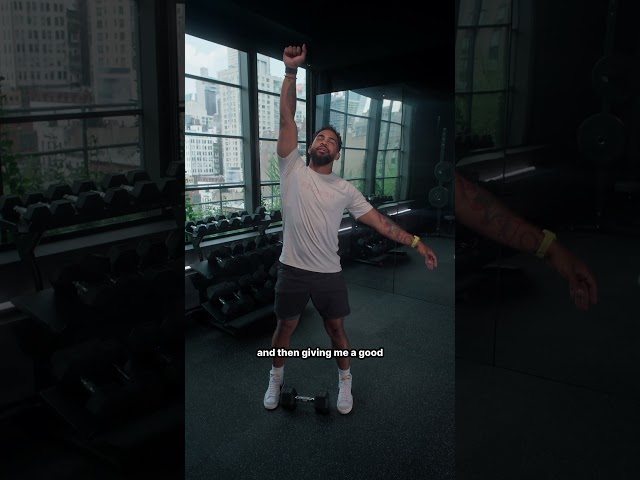
The dumbbell snatch is an explosive single-arm movement that takes a dumbbell from the floor to overhead in one powerful motion. This exercise develops hip power, shoulder stability, and full-body coordination without the technical demands of the barbell snatch, making it accessible to more athletes.
Coaching Note
Start with the dumbbell between your feet, not in front of them. Drive explosively from your hips—the arm guides the weight but does not pull it. Punch straight up at the top rather than swinging wide. The dumbbell should travel close to your body throughout. Alternate arms each rep or complete all reps on one side before switching.
Muscles worked: Dumbbell Snatch
Why This Exercise Works
The dumbbell snatch trains explosive hip extension and overhead stability one arm at a time. The single-arm nature challenges core anti-rotation while building unilateral power. Less technical than barbell snatch while providing similar athletic benefits.
Browse all full body exercises
Also targets: Shoulders, Glutes, Hamstrings
Want Ely to consider Dumbbell Snatch for your plan?
Share your training details. Ely reviews the full week before anything is delivered.
Dumbbell Snatch form guide
- 1
Start with dumbbell between feet, squat position.
- 2
Drive up explosively, extending hips.
- 3
Pull dumbbell up close to body.
- 4
Punch dumbbell overhead to lockout.
- 5
Lower to start and repeat.
What are the best tips for the Dumbbell Snatch?
Power comes from hip extension.
Keep dumbbell close to body.
Punch straight up, dont swing wide.
Master with lighter weight first.
When to Use the Dumbbell Snatch
Use early in workouts for power development (5-6 reps per arm) or later for conditioning (10-15 reps per arm). This exercise works well in CrossFit workouts, circuit training, and as a more accessible alternative to barbell snatching.
What are common Dumbbell Snatch mistakes to avoid?
Swinging dumbbell wide instead of up.
Using arm instead of hip power.
Not fully extending overhead.
Starting with hips too high.
Is the Dumbbell Snatch right for you?
Intermediate athletes seeking explosive training without barbell snatch complexity. CrossFit participants and those wanting single-arm power development.
Programming examples for Dumbbell Snatch
The sets, reps, and rest times below are examples. Adjust them for your current ability, the exercise, and your total training. These ranges are not exclusive to one goal.
Example: 4-5 sets of 5-6 reps per arm. Rest 60-90 seconds.
Muscle Growth
6-8 reps per arm
Example rest: 90s-2min; extend as needed
Strength
3-5 reps per arm
Example rest: 2-3min; extend as needed
Endurance
10-15 reps per arm
Example rest: 60s; extend as needed
Where to Use in Your Workout
Position early in workouts when fresh for power work, or use for conditioning later in the session. The single-arm nature allows one arm to rest while the other works.
Sample Workout Blocks
Week 1: 4x5/arm @ RPE 7 | Week 2: 5x5/arm @ RPE 7 | Week 3: 5x6/arm @ RPE 8 | Week 4 (deload): 3x5/arm @ RPE 6
Want help choosing exercises, sets, and reps for your schedule? Ely reviews purchased plans before delivery.
Get Your Custom PlanWhere Dumbbell Snatch fits in your workout
This is one example of how Dumbbell Snatch could sit inside a complete workout. Your plan may use different movements after Ely checks your assessment.
Sample workout
- Main Movement4 × 8
- Secondary Movement3 × 10
- Dumbbell Snatch3 × 12
- Accessory Movement3 × 15
Use this exercise in Gym Mode
MySetPlan guides you set by set, times your rest, records your work, and tells you what to do next from the plan Ely approved.
Start My $19 WeekWhat are good alternatives to the Dumbbell Snatch?
Kettlebell Snatch
Full BodyKettlebellIntermediate
Hang Snatch
Full BodyBarbellAdvanced
Power Clean
Full BodyBarbellAdvanced
Other Variations
- Alternating Dumbbell Snatch
- Hang Dumbbell Snatch
- Squat Snatch
- Power DB Snatch
Want a plan you do not have to piece together?
Share your goal, schedule, equipment, and experience. Ely checks the complete exercise selection before he approves your week.
Start My $19 Starter Week$19 once · No automatic renewal · Delivered in 1–3 business days
Related Content
Safety Notes
- Start with lighter weight.
- Master hip hinge first.
- Keep dumbbell close.